Drug Repurposing Potential of Natural Products: Molecular Targets, Pharmacological Profiles, and Precision Therapeutic Strategies: A Narrative Review
DOI:
https://doi.org/10.68041/jbpt.v2i3/09Keywords:
Biological Availability, Drug Repositioning, Phytochemicals, Precision Medicine, Structure-Activity RelationshipAbstract
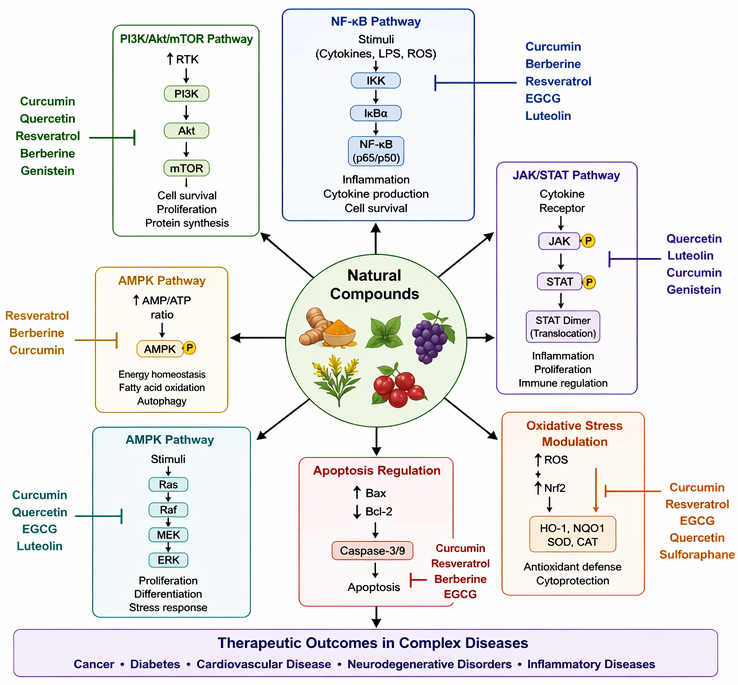
Repurposing compounds is an important way to look at new uses for approved drugs. Natural products have a wide range of structural and pharmacologic diversity and have the potential to be applied in repurposing, especially for complex and chronic diseases. This is a narrative review of molecular targets, pharmacological properties and therapeutic strategies for repurposed natural compounds. Natural products are predicted to modulate pathways that include PI3K/Akt, NF-κB, and AMPK, all of which play a role in cancer, neurodegenerative and metabolic diseases, according to computational and systems level studies. The predicted mechanisms have been studied preclinically and pharmacological effects have been observed in experimental models; structure-activity relationship studies and semi-synthetic modifications have been examined to gain a more favorable bioavailability and target-related properties. Nevertheless, low solubility and high metabolism of phytochemicals, and their variable compositions, are significant limitations. While multi-omics and AI methods could help identify targets and aid precision medicine, predictions need experimental and clinical validation. The clinical evidence is limited and heterogeneous, and larger trials are needed to confirm efficacy and safety, and reported to have therapeutic effect for curcumin, resveratrol, and berberine. Standardization and regulatory variations, are also barriers to translation. In summary, combining computational prediction, preclinical evidence, and strong clinical data is crucial for natural product drug discovery.
References
1. Rudrapal M, Paudel KR, Pangeni R. Editorial: Drug repurposing and polypharmacology: A synergistic approach in multi-target based drug discovery. Front Pharmacol. 2022;13:1101007. https://doi.org/10.3389/fphar.2022.1101007 DOI: https://doi.org/10.3389/fphar.2022.1101007
2. Ray A, Dey S, Sur D. Blueprint for drug repurposing success: Foundational concepts and practical framework. Drug Dev Res. 2026 87(2):e70270. https://doi.org/10.1002/ddr.70270 DOI: https://doi.org/10.1002/ddr.70270
3. Huang K, Chandak P, Wang Q, Havaldar S, Vaid A, Leskovec J, et al. A foundation model for clinician-centered drug repurposing. Nat Med. 2024;30(12):3601–3613. https://doi.org/10.1038/s41591-024-03233-x DOI: https://doi.org/10.1038/s41591-024-03233-x
4. Ryszkiewicz P, Malinowska B, Schlicker E. Polypharmacology: promises and new drugs in 2022. Pharmacol Rep. 2023;75(4):755–770. https://doi.org/10.1007/s43440-023-00501-4 DOI: https://doi.org/10.1007/s43440-023-00501-4
5. Xie S, Zhan F, Zhu J, Xu S, Xu J. The latest advances with natural products in drug discovery and opportunities for the future: a 2025 update. Expert Opin Drug Discov. 2025;20(7). https://doi.org/10.1080/17460441.2025.2507382 DOI: https://doi.org/10.1080/17460441.2025.2507382
6. Chihomvu P, Ganesan A, Gibbons S, Woollard K, Hayes MA. Phytochemicals in drug discovery—A confluence of tradition and innovation. Int J Mol Sci. 2024;25(16):8792. https://doi.org/10.3390/ijms25168792 DOI: https://doi.org/10.3390/ijms25168792
7. Merecz-Sadowska A, Sadowski A, Zielinska-Blizniewska H, Zajdel K, Zajdel R. Network pharmacology as a tool to investigate the antioxidant and anti-inflammatory potential of plant secondary metabolites—A review and perspectives. Int J Mol Sci. 2025;26(14):6678. https://doi.org/10.3390/ijms26146678 DOI: https://doi.org/10.3390/ijms26146678
8. Carnazza M, Yang N, Tiwari RK, Geliebter J, Li XM. Natural compounds targeting MAPK, PI3K/Akt, and JAK/STAT signaling in papillary thyroid cancer. Int J Mol Sci. 2025;26(21): 10498. https://doi.org/10.3390/ijms262110498 DOI: https://doi.org/10.3390/ijms262110498
9. Babalola OO, Bridget K, Oyubu G, Waheed SA, Ajiboye SA, Fakayode AE, et al. Integrating phytochemicals and in silico methods for modern drug discovery: a comprehensive review. Discover Chem. 2025;2(1):297. https://doi.org/10.1007/s44371-025-00373-y DOI: https://doi.org/10.1007/s44371-025-00373-y
10. Sanjai C, Gaonkar SL, Hakkimane SS. Harnessing nature’s toolbox: Naturally derived bioactive compounds in nanotechnology-enhanced formulations. ACS Omega. 2024;9(43):43302–43318. https://doi.org/10.1021/acsomega.4c07756 DOI: https://doi.org/10.1021/acsomega.4c07756
11. Aggarwal BB, Sung B. Pharmacological basis for the role of curcumin in chronic diseases: an age-old spice with modern targets. Trends Pharmacol Sci. 2009;30(2):85-94. https://doi.org/ 10.1016/j.tips.2008.11.002 DOI: https://doi.org/10.1016/j.tips.2008.11.002
12. El-Saadony MT, Saad AM, Mohammed DM, Alkafaas SS, Ghosh S, Negm SH, et al. Curcumin, an active component of turmeric: biological activities, nutritional aspects, immunological, bioavailability, and human health benefits—a comprehensive review. Front Immunol. 2025;16:1603018. https://doi.org/10.3389/fimmu.2025.1603018 DOI: https://doi.org/10.3389/fimmu.2025.1603018
13. Sun S, Yu Y, Jo Y, Han JH, Xue Y, Cho M, et al. Impact of extraction techniques on phytochemical composition and bioactivity of natural product mixtures. Front Pharmacol. 2025;16:1615338. https://doi.org/10.3389/fphar.2025.1615338 DOI: https://doi.org/10.3389/fphar.2025.1615338
14. Talebi M, Shahbazi K, Dakkali MS, Akbari M, Almasi Ghale R, Hashemi S, et al. Phytosomes: A promising nanocarrier system for enhanced bioavailability and therapeutic efficacy of herbal products. Phytomed Plus. 2025;5(2):100779. https://doi.org/10.1016/j.phyplu.2025.100779 DOI: https://doi.org/10.1016/j.phyplu.2025.100779
15. Cui M, Deng F, Disis ML, Cheng C, Zhang L. Advances in the clinical application of high-throughput proteomics. Explor Res Hypothesis Med. 2024;9(3):209–220. https://doi.org/10.14218/erhm.2024.00006 DOI: https://doi.org/10.14218/ERHM.2024.00006
16. Sperry MM, Oskotsky T, Marić I, Kaushal S, Takeda T, Horvath V, et al. Target-agnostic drug prediction integrated with medical record analysis uncovers differential associations of statins with increased survival in COVID-19 patients. medRxiv. 2022. https://doi.org/10.1101/2022.04.12.22273802 DOI: https://doi.org/10.1371/journal.pcbi.1011050
17. Gholizadeh E, Karbalaei R, Khaleghian A, Salimi M, Gilany K, Soliymani R, et al. Identification of celecoxib-targeted proteins using label-free thermal proteome profiling on rat hippocampus. Mol Pharmacol. 2021;99(5):308–318. https://doi.org/10.1124/molpharm.120.000210 DOI: https://doi.org/10.1124/molpharm.120.000210
18. Yang L, Wang H, Zhu Z, Yang Y, Xiong Y, Cui X, et al. Network pharmacology-driven sustainability: AI and multi-omics synergy for drug discovery in traditional Chinese medicine. Pharmaceuticals (Basel). 2025;18(7):1074. https://doi.org/10.3390/ph18071074 DOI: https://doi.org/10.3390/ph18071074
19. Mendoza-Calderón SA, Cruz Luis HI, Pérez-Campos Mayoral L, Vásquez-Martínez IP, Pérez-Campos E, Bazán Salinas IL, et al. Plant-derived secondary metabolites modulating inflammation-driven pathways in hepatocellular carcinoma: Preclinical insights. Curr Issues Mol Biol. 2026;48(2):172. https://doi.org/10.3390/cimb48020172 DOI: https://doi.org/10.3390/cimb48020172
20. Zoi V, Kyritsis AP, Galani V, Lazari D, Sioka C, Voulgaris S, et al. The role of curcumin in cancer: A focus on the PI3K/Akt pathway. Cancers (Basel). 2024;16(8):1554. https://doi.org/10.3390/cancers16081554 DOI: https://doi.org/10.3390/cancers16081554
21. Li N, Liu TH, Yu JZ, Li CX, Liu Y, Wu YY, et al. Curcumin and curcumol inhibit NF-κB and TGF-β1/Smads signaling pathways in CSE-treated RAW264.7 cells. Evid Based Complement Alternat Med. 2019;2019(1):3035125. https://doi.org/10.1155/2019/3035125 DOI: https://doi.org/10.1155/2019/3035125
22. Shen CC, Yang MY, Hsieh WY, Tsay GJ, Yang YC, Huang YF, et al. Berberine’s impact on apoptosis, proliferation, uptake efficiency, and nanoparticle-based therapy in DBTRG cells. ACS Nanoscience Au. 2025;5(3):165–183. https://doi.org/10.1021/acsnanoscienceau.5c00004 DOI: https://doi.org/10.1021/acsnanoscienceau.5c00004
23. Pineda-Ramírez N, Alquisiras-Burgos I, Ortiz-Plata A, Ruiz-Tachiquín ME, Espinoza-Rojo M, Aguilera P, et al. Resveratrol activates neuronal autophagy through AMPK in the ischemic brain. Mol Neurobiol. 2020;57(2):1055–1069. https://doi.org/10.1007/s12035-019-01803-6 DOI: https://doi.org/10.1007/s12035-019-01803-6
24. Ghosh A, Chakraborty M, Chandra A, Alam MP. Structure-activity relationship (SAR) and molecular dynamics study of withaferin-A fragment derivatives as potential therapeutic lead against main protease (Mpro) of SARS-CoV-2. J Mol Model. 2021;27(3):97. https://doi.org/10.1007/s00894-021-04703-6 DOI: https://doi.org/10.1007/s00894-021-04703-6
25. Feng JY, Liu ZQ. Phenolic and enolic hydroxyl groups in curcumin: which plays the major role in scavenging radicals? J Agric Food Chem. 2009;57(22):11041–11046. https://doi.org/10.1021/jf902244g DOI: https://doi.org/10.1021/jf902244g
26. Al Noman A, Sharma PD, Zohora UF, Shifa FA, Abdallah EM, Alhatlani BY, et al. Epigallocatechin-3-gallate: a multi-target bioactive molecule derived from green tea against Oropouche virus—a computational approach to host–pathogen network modulation. Front Chem. 2025;13:1590498. https://doi.org/10.3389/fchem.2025.1590498 DOI: https://doi.org/10.3389/fchem.2025.1590498
27. Rubach P, Majorek KA, Gucwa M, Murzyn K, Wlodawer A, Minor W, et al. Advances in cryo-electron microscopy (cryoEM) for structure-based drug discovery. Expert Opin Drug Discov. 2025;20(2):163–176. https://doi.org/10.1080/17460441.2025.2450636 DOI: https://doi.org/10.1080/17460441.2025.2450636
28. Grieco A, Quereda-Moraleda I, Martin-Garcia JM. Innovative strategies in X-ray crystallography for exploring structural dynamics and reaction mechanisms in metabolic disorders. J Pers Med. 2024;14(9):909. https://doi.org/10.3390/jpm14090909 DOI: https://doi.org/10.3390/jpm14090909
29. Balasco Serrão VH. Biological breakthroughs and drug discovery revolution via cryo-electron microscopy of membrane proteins. Membranes. 2025;15(12):368. https://doi.org/10.3390/membranes15120368 DOI: https://doi.org/10.3390/membranes15120368
30. Mohamed MA, Elkhateeb WA, Daba GM. Rapamycin golden jubilee and still the miraculous drug: a potent immunosuppressant, antitumor, rejuvenative agent, and potential contributor in COVID-19 treatment. Bioresour Bioprocess. 2022;9(1):65. https://doi.org/10.1186/s40643-022-00554-y DOI: https://doi.org/10.1186/s40643-022-00554-y
31. Kleiz-Ferreira J, Brams M, Harrison PJ, Gallagher CI, Nys M, Donze Y, et al. Structure of a pH-sensitive pentameric ligand-gated ion channel from the Sarcoptes scabies mite. Nat Commun. 2026;17(1):3392. https://doi.org/10.1038/s41467-026-70575-0 DOI: https://doi.org/10.1038/s41467-026-70575-0
32. Haddad R, Alrabadi N, Altaani B, Li T. Paclitaxel drug delivery systems: focus on nanocrystals’ surface modifications. Polymers. 2022;14(4):658. https://doi.org/10.3390/polym14040658 DOI: https://doi.org/10.3390/polym14040658
33. Shannar A, Chou PJ, Peter R, Dave PD, Patel K, Pan Y, et al. Pharmacodynamics (PD), pharmacokinetics (PK) and PK–PD modeling of NRF2 activating dietary phytochemicals in cancer prevention and in health. Curr Pharmacol Rep. 2025;11(1):6. https://doi.org/10.1007/s40495-024-00388-6 DOI: https://doi.org/10.1007/s40495-024-00388-6
34. Oyanna VO, Clarke JD. Mechanisms of intestinal pharmacokinetic natural product–drug interactions. Drug Metab Rev. 2024;56(3):285–301. https://doi.org/10.1080/03602532.2024.2386597 DOI: https://doi.org/10.1080/03602532.2024.2386597
35. Antonara L, Triantafyllopoulou E, Chountoulesi M, Pippa N, Dallas PP, Rekkas DM, et al. Lipid-based drug delivery systems: Concepts and recent advances in transdermal applications. Nanomaterials (Basel). 2025;15(17):1326. https://doi.org/10.3390/nano15171326 DOI: https://doi.org/10.3390/nano15171326
36. Khan S, Sharma A, Jain V. An overview of nanostructured lipid carriers and its application in drug delivery through different routes. Adv Pharm Bull. 2023;13(3):446–460. https://doi.org/10.34172/apb.2023.056 DOI: https://doi.org/10.34172/apb.2023.056
37. Magini A, Datti A. Curcumin between pleiotropic potential and translational constraints. Int J Mol Sci. 2026;27(5):2212. https://doi.org/10.3390/ijms27052212 DOI: https://doi.org/10.3390/ijms27052212
38. Wu YY, Xu YM, Lau ATY. Epigenetic effects of herbal medicine. Clin Epigenetics. 2023;15(1):85. https://doi.org/10.1186/s13148-023-01481-1 DOI: https://doi.org/10.1186/s13148-023-01481-1
39. Ming T, Tao Q, Tang S, Zhao H, Yang H, Liu M, et al. Curcumin: an epigenetic regulator and its application in cancer. Biomed Pharmacother. 2022;156:113956. https://doi.org/10.1016/j.biopha.2022.113956 DOI: https://doi.org/10.1016/j.biopha.2022.113956
40. Nurkolis F, Taslim NA, Syahputra RA, Annette d'Arqom DA, Tjandrawinata RR, Purba AKR, et al. Food phytochemicals as epigenetic modulators in diabetes: a systematic review. J Agric Food Res. 2025;21:101873. https://doi.org/10.1016/j.jafr.2025.101873 DOI: https://doi.org/10.1016/j.jafr.2025.101873
41. Bhat AR, Ahmed S. Artificial intelligence (AI) in drug design and discovery: A comprehensive review. In Silico Res Biomed. 2025;1:100049. https://doi.org/10.1016/j.insi.2025.100049 DOI: https://doi.org/10.1016/j.insi.2025.100049
42. Rifaioglu AS, Atas H, Martin MJ, Cetin-Atalay R, Atalay V, Doğan T, et al. Recent applications of deep learning and machine intelligence on in silico drug discovery: methods, tools and databases. Brief Bioinform. 2019;20(5):1878–1912. https://doi.org/10.1093/bib/bby061 DOI: https://doi.org/10.1093/bib/bby061
43. Tutone M, Almerico AM. Computational strategies reshaping modern drug discovery. Molecules. 2026;3192):200. https://doi.org/10.3390/molecules31020200 DOI: https://doi.org/10.3390/molecules31020200
44. Alam S, Verma S, Fatima K, Luqman S, Srivastava SK, Khan F, et al. Pharmacophore and QSAR guided design, synthesis, pharmacokinetics and in vitro evaluation of curcumin analogs for anticancer activity. Curr Med Chem. 2024;31(5):620–639. https://doi.org/10.2174/0929867330666230428162720 DOI: https://doi.org/10.2174/0929867330666230428162720
45. Yuan Y, Pan F, Zhu Z, Yang Z, Wang O, Li Q, et al. Construction of a QSAR model based on flavonoids and screening of natural pancreatic lipase inhibitors. Nutrients. 2023;15(15):3489. https://doi.org/10.3390/nu15153489 DOI: https://doi.org/10.3390/nu15153489
46. Singh MB, Raghav S, Chavda V, Singh P, Yadav SK, Kim W, et al. Advancing drug solubility and precision delivery with next-generation nanocarriers: Recent innovations, opportunities, and challenges. Nano Trends. 2026;13:100183. https://doi.org/10.1016/j.nwnano.2026.100183 DOI: https://doi.org/10.1016/j.nwnano.2026.100183
47. Salla M, Karaki N, El Kaderi B, Ayoub AJ, Younes S, Abou Chahla MN, et al. Enhancing the bioavailability of resveratrol: combine it, derivatize it, or encapsulate it? Pharmaceutics. 2024;16(4):569. https://doi.org/10.3390/pharmaceutics16040569 DOI: https://doi.org/10.3390/pharmaceutics16040569
48. Agu PC, Afiukwa CA, Orji OU, Ezeh EM, Ofoke IH, Ogbu CO, et al. Molecular docking as a tool for the discovery of molecular targets of nutraceuticals in diseases management. Sci Rep. 2023;13(1):13398. https://doi.org/10.1038/s41598-023-40160-2 DOI: https://doi.org/10.1038/s41598-023-40160-2
49. Cousins HC, Nayar G, Altman RB. Computational approaches to drug repurposing: methods, challenges, and opportunities. Annu Rev Biomed Data Sci. 2024;7(1):15–29. https://doi.org/10.1146/annurev-biodatasci-110123-025333 DOI: https://doi.org/10.1146/annurev-biodatasci-110123-025333
50. Mamoudou H, Alain MMM. From prediction to design: a machine learning model for de novo bioactive compounds and personalized biotherapeutics. Lett Drug Des Discov. 2025;22(12):100322. https://doi.org/10.1016/j.lddd.2026.100322 DOI: https://doi.org/10.1016/j.lddd.2026.100322
51. Zou M, Zhou H, Gu L, Zhang J, Fang L. Therapeutic target identification and drug discovery driven by chemical proteomics. Biology. 2024;13(8):555. https://doi.org/10.3390/biology13080555 DOI: https://doi.org/10.3390/biology13080555
52. Fang ZH, Sim BY, Gunasinghe KK, Shabbir S, Ginjom IR, San HS et al. Hit identification in ultra large virtual screening: an integrative review and future challenges. Drug Discovery Today. 2026;31(2):104616. https://doi.org/10.1016/j.drudis.2026.104616 DOI: https://doi.org/10.1016/j.drudis.2026.104616
53. Xu J, Li Y, Yang X, Li H, Xiao X, You J, et al. Quercetin inhibited LPS-induced cytokine storm by interacting with the AKT1-FoxO1 and Keap1-Nrf2 signaling pathway in macrophages. Sci Rep. 2024;14(1):20913. https://doi.org/10.1038/s41598-024-71569-y DOI: https://doi.org/10.1038/s41598-024-71569-y
54. Rahman MH, Bajgai J, Fadriquela A, Sharma S, Trinh TT, Akter R, et al. Therapeutic potential of natural products in treating neurodegenerative disorders and their future prospects and challenges. Molecules. 2021;26(17):5327. https://doi.org/10.3390/molecules26175327 DOI: https://doi.org/10.3390/molecules26175327
55. Gutierrez JG, Lau E, Dharmapalan S, Parker M, Chen Y, Álvarez MA, et al. Multi-output prediction of dose-response curves enables drug repositioning and biomarker discovery. NPJ Precis Oncol. 2024;8(1):209. https://doi.org/10.1038/s41698-024-00691-x DOI: https://doi.org/10.1038/s41698-024-00691-x
56. Marques L, Costa B, Pereira M, Silva A, Santos J, Saldanha L, et al. Advancing precision medicine: A review of innovative in silico approaches for drug development, clinical pharmacology and personalized healthcare. Pharmaceutics. 2024;16(3):332. https://doi.org/10.3390/pharmaceutics16030332 DOI: https://doi.org/10.3390/pharmaceutics16030332
57. Jiang Z, Zhou X, Li R, Michal JJ, Zhang S, Dodson MV, et al. Whole transcriptome analysis with sequencing: methods, challenges and potential solutions. Cell Mol Life Sci. 2015;72(18):3425–3439. https://doi.org/10.1007/s00018-015-1934-y DOI: https://doi.org/10.1007/s00018-015-1934-y
58. Zhao M, Ma J, Li M, Zhang Y, Jiang B, Zhao X, et al. Cytochrome P450 enzymes and drug metabolism in humans. Int J Mol Sci. 2021;22(23):12808. https://doi.org/10.3390/ijms222312808 DOI: https://doi.org/10.3390/ijms222312808
59. Peterson CT. Gut microbiota-mediated biotransformation of medicinal herb-derived natural products: A narrative review of new frontiers in drug discovery. J. 2024;7(3):351–372. https://doi.org/10.3390/j7030020 DOI: https://doi.org/10.3390/j7030020
60. Fatima G, Khan S, Shukla V, Awaida W, Li D, Gushchina YS, et al. Nutraceutical formulations and natural compounds for the management of chronic diseases. Front Nutr. 2025;12:1682590. https://doi.org/10.3389/fnut.2025.1682590 DOI: https://doi.org/10.3389/fnut.2025.1682590
61. Zhang F, Niu B. Effect of curcumin on inflammatory markers and disease activity in patients with rheumatoid arthritis: A meta-analysis. Medicine (Baltimore). 2025;104(48):e46177. https://doi.org/10.1097/MD.0000000000046177 DOI: https://doi.org/10.1097/MD.0000000000046177
62. Tabrizi R, Vakili S, Akbari M, Mirhosseini N, Lankarani KB, Rahimi M et al. The effects of curcumin-containing supplements on biomarkers of inflammation and oxidative stress: a systematic review and meta-analysis of randomized controlled trials. Phytother Res. 2019;33(2):253–262. https://doi.org/10.1002/ptr.6226 DOI: https://doi.org/10.1002/ptr.6226
63. Jeyaraman MM, Al-Yousif NSH, Singh Mann A, Dolinsky VW, Rabbani R, Zarychanski R, et al. Resveratrol for adults with type 2 diabetes mellitus. Cochrane Database Syst Rev. 2020;1(1):CD011919. https://doi.org/10.1002/14651858.CD011919 DOI: https://doi.org/10.1002/14651858.CD011919.pub2
64. Kan LL, Chan BC, Leung PC, Wong CK. Natural-product-derived adjunctive treatments to conventional therapy and their immunoregulatory activities in triple-negative breast cancer. Molecules. 2023;28(15):5804. https://doi.org/10.3390/molecules28155804 DOI: https://doi.org/10.3390/molecules28155804
65. Mirmiran P, Bahadoran Z, Gaeini Z. Common limitations and challenges of dietary clinical trials for translation into clinical practices. Int J Endocrinol Metab. 2021;19(3):e108170. https://doi.org/10.5812/ijem.108170 DOI: https://doi.org/10.5812/ijem.108170
66. Ocana A, Pandiella A, Privat C, Bravo I, Luengo-Oroz M, Amir E, et al. Integrating artificial intelligence in drug discovery and early drug development: A transformative approach. Biomark Res. 2025;13(1):45. https://doi.org/10.1186/s40364-025-00758-2 DOI: https://doi.org/10.1186/s40364-025-00758-2
67. Islam S, Ahmed MMS, Islam MA, Hossain N, Chowdhury MA. Advances in nanoparticles in targeted drug delivery—A review. Results Surf Interfaces. 2025;19:100529. https://doi.org/10.1016/j.rsurfi.2025.100529 DOI: https://doi.org/10.1016/j.rsurfi.2025.100529
68. O'Brien K, Ried K, Binjemain T, Sali A. Integrative approaches to the treatment of cancer. Cancers (Basel). 2022;14(23):5933. https://doi.org/10.3390/cancers14235933 DOI: https://doi.org/10.3390/cancers14235933
69. Sagharyan M, Mohammadbagherlou S, Samari E, Zargar M, Ghorbani A, Chen M, et al. Synthetic biology and metabolic engineering strategies in identifying and producing plant natural products; with emphasis on the CRISPR/Cas systems. Ind Crops Prod. 2025;230:121060. https://doi.org/10.1016/j.indcrop.2025.121060 DOI: https://doi.org/10.1016/j.indcrop.2025.121060
Published
Issue
Section
License
Copyright (c) 2026 Muhammad Khaliq, Kiran Aftab, Ayesha Ikhlaq, Aftab Ahmed

This work is licensed under a Creative Commons Attribution-NonCommercial 4.0 International License.
Journal of Biomolecules, Pathogenesis and Therapeutics (JBPT) follows the Attribution Creative Commons-Non commercial (CC BY-NC 4.0) license which allows the users to copy and redistribute the material in any medium or format, remix, transform and build upon the material. The users must give credit to the source and indicate, provide a link to the license, and indicate if changes were made. However, the CC BY-NC 4.0 license restricts the use of material for commercial purposes (Further details are available at website. The Editorial Board of the JBPT endeavors to ensure the accuracy, integrity, and quality of all published content. However, the responsibility of opinions, interpretations, and conclusions expressed in the published articles rests entirely with the authors and do not necessarily reflect the views of the Editorial Board, publisher, or affiliated institutions.