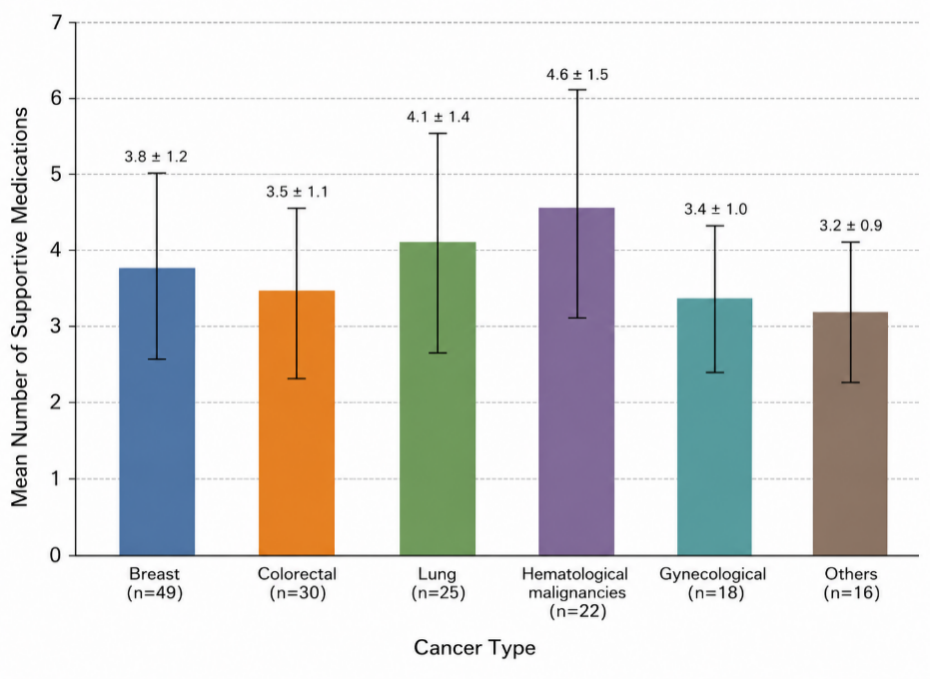
Figure 1: Average number of supportive medications according to cancer type.
Khadija Aslam1 | Raeesa Ali2 | Ramisha Rehmat2*
1Department of Pathology, Lahore General Hospital, Lahore, Pakistan | 2Faculty of Rehabilitation and Allied Health Sciences, Riphah International University, Lahore, Pakistan
*Correspondence: Ramisha Rehmat ([email protected])
Received: 19 August, 2026; Revised: 05 September, 2026; Accepted: 12 September, 2026; Published: 20 September, 2026
Background: In oncology, supportive medicines play an important role in preventing or managing treatment toxicity and in maintaining tolerance to systemic cancer treatment. This study aimed to describe the supportive medication use, indications, medication-related problems, and clinical outcomes of oncology patients receiving chemotherapy. Methods: This study involved 160 adults with solid or hematological malignancies treated with systemic chemotherapy. Cancer type, chemotherapy regimen, supportive medications, therapeutic indications, polypharmacy, medication-related problems, adverse drug reactions, and treatment outcomes were included. Data frequencies, percentages, means, standard deviations, and medians were summarized in the results in SPSS version 26.0. Results: The age of the study population was 55.3 ± 12.8 years, with 90(56.3%) being female. In total, 151(94.4%) of patients had supportive drugs. The most commonly used drugs were antiemetics (90.6%), proton pump inhibitors 116(72.5%), corticosteroids 104(65.0%), and analgesics 97(60.6%). The mean supportive-medication burden was greatest for patients with hematological malignancies (4.6 ± 1.5). A total of 47(29.4%) patients had five or more supportive medicines, or "polypharmacy. 33(20.6%) had potential drug interactions, and 118(73.8%) had good symptom control, and 127(79.4%) finished chemotherapy as planned. Conclusions: Medications that supported patients' treatment and symptom management were widespread and effective. Medication reconciliation, screening for medication interactions, and pharmacist-led review of medication regimens can help prevent polypharmacy and medication-related problems, enhancing the safety and effectiveness of supportive care.
Keywords: Antiemetics; Drug Interactions; Drug Utilization; Neoplasms; Polypharmacy; Treatment Outcome
Supportive care is also an essential component of modern oncology as systemic anti-cancer treatment often results in nausea and vomiting, pain, mucous membrane injury, dyspepsia, risk of infection, inflammation, and other side effects that impact quality of life and can delay or otherwise disrupt anti-cancer treatment 1. Pharmacological supportive care consists of antiemetics, corticosteroids, analgesics, acid-suppressants, antimicrobial drugs, hematopoietic growth factors and drugs for bowel or metabolic complications 2. There is current evidence to support antiemetic prophylaxis suited to regimen emetogenicity, patient risk, and higher-risk therapy using combinations of 5-hydroxy tryptamine-3 receptor antagonists, neurokinin-1 receptor antagonists, dexamethasone, and olanzapine 3. A recent meta-analysis suggests that dexamethasone-sparing regimens achieve antiemetic effectiveness in some combinations and reduce steroid use 4. Similarly, cancer-related pain is best managed with a non-opioid or opioid therapy which is individualized and assessed for benefit and harm 5.
Medication burden may be increased due to increased usage of supportive medicines 6. In a systematic review and meta-analysis of polypharmacy in adults with cancer, the number of polypharmacy patients was estimated at around 29% 7. Polypharmacy and possible drug–drug interactions are common among older chemotherapy patients and have been associated with treatment toxicity and early treatment discontinuations 8. Several other factors such as inappropriate indication, dose, duplication, non-adherence to the prescription, and clinically important interactions may be key contributors to drug-related problems 9. Proton pump inhibitors should be investigated as they can affect the absorption and/or action of some anticancer medications 10. Based on the evidence from systematic reviews, medication review services performed by the pharmacist can decrease medication-related problems, enhance adherence, and better manage chemotherapy-induced nausea and vomiting 11. This study may provide institution-specific evidence to optimize supportive medication use, identify drug-related problems, and improve the safety and quality of supportive oncology care.
The evidence regarding the pattern, indications, safety, and outcomes of supportive medications for use remains scarce at the institutional level in diverse oncology settings. The purpose of this study was to describe the pattern of supportive medications prescribed to patients with oncology receiving systemic cancer therapy. It also evaluated medication-related problems, symptom control, and adherence to the treatment.
This cross-sectional descriptive study (July 2023 to December 2023) from the oncology department of a tertiary care teaching hospital Lahore included 160 adults receiving systemic chemotherapy for either solid or hematological malignancies. The sample size was calculated using OpenEpi, Version 3.0.2 (Emory University, Atlanta, GA, USA), assuming a 50% prevalence of supportive medication use, a 95% confidence level, and an appropriate margin of error. The sample size was calculated using the formula n = Z2(1-P)/e2, where n represents the required sample size, Z is the standard normal deviate corresponding to the confidence level, P is the expected prevalence, and e is the margin of error. The calculated sample size was considered adequate for describing the pattern of supportive medication utilization in the study population 12.
A structured data extraction form was used to review patient records. Data that were collected included demographic data (age and sex), cancer diagnosis, chemotherapy regimen, supportive medications received, indication for supportive medications, number of supportive medications received per patient, medication-related problems, documented adverse drug reactions, and treatment outcomes. Medications providing supportive care were categorized as anti-emetic, analgesic, corticosteroid, gastroprotective, hematopoietic growth factor, antimicrobial, nutritional supplement, and antifungal.
The main outcome was the trend of supportive medication use. Secondary outcomes assessed included the presence of polypharmacy, medication-related problems and therapeutic indications, and clinical outcomes after supportive therapy. Polypharmacy was defined as supportive medications ≥ 5 per chemotherapy cycle. Medication-related problems such as potential for drug interaction, duplicate therapy, inappropriate duration of therapy, and adverse drug reactions were detected by reviewing the prescribing records and clinical documentation.
The Statistical Package for the Social Sciences IBM SPSS Statistics, Version 27.0 (Released 2020; IBM Corp., Armonk, NY, USA; RRID:SCR_016479) was used for the analysis of all the data. Means and standard deviations or medians were used to describe continuous variables, and frequencies and percentages were used to describe categorical variables. The results were reported descriptively, as the study concentrated on the evaluation of prescribing patterns, and the use of medicines was not analysed using multivariable regression analysis. This reporting method is in line with the common drug utilization research method. Before data collection, the Institutional Review Board granted ethical approval. All extracted records were anonymized to make sure patients' confidentiality was maintained, and the study was performed based on the ethical principles of the Declaration of Helsinki 13.
There were 160 oncology patients undergoing systemic anticancer therapy. The mean age was 55.3 ± 12.8 years, and 56.3% were female. The most prevalent malignancies were breast (30.6%) and colon and rectum (18.8%). Overall, 94.4% of patients were treated with at least one supportive medicine, and the median number of supportive medicines was 3 per patient. Table I showed that out of 94.4% of patients who received supportive therapy, 90.6% used anti-emetic medications. Proton pump inhibitors, corticosteroids, and analgesics were also frequently prescribed, reflecting the range of supportive therapies used during anticancer treatment, and enhancing patient comfort during the course of anticancer therapy.
| Supportive Medication Category | Patients Receiving Medication (n) | % |
|---|---|---|
| Antiemetics | 145 | 90.6 |
| Proton pump inhibitors | 116 | 72.5 |
| Corticosteroids | 104 | 65.0 |
| Analgesics | 97 | 60.6 |
| Hematinic/Vitamin supplements | 81 | 50.6 |
| Antimicrobials | 63 | 39.4 |
| Growth factor support (G-CSF) | 39 | 24.4 |
| Antifungal agents | 26 | 16.3 |
The number of supportive medications was highest in patients with hematological malignancy (4.6 ±1.5) and next highest in patients with lung cancer (4.1 ±1.4). There was variation in supportive care needs by cancer type, with breast and gynecological cancers needing comparatively fewer supportive medicines, as presented in Table II. These differences indicate variation in supportive medication requirements according to malignancy type.
| Cancer Type | Patients (n) | Mean Number of Supportive Drugs ± SD |
|---|---|---|
| Breast | 49 | 3.8 ± 1.2 |
| Colorectal | 30 | 3.5 ± 1.1 |
| Lung | 25 | 4.1 ± 1.4 |
| Hematological malignancies | 22 | 4.6 ± 1.5 |
| Gynecological | 18 | 3.4 ± 1.0 |
| Others | 16 | 3.2 ± 0.9 |
As shown in Figure 1, patients with hematological malignancies had the highest mean number of supportive medications, followed by patients with lung cancer. In contrast, patients with gynecological cancers and those in the “other” cancer category had comparatively lower mean numbers of supportive medications. The figure demonstrates variation in supportive medication burden across different cancer types.
Figure 1: Average number of supportive medications according to cancer type.
The main indication for using supportive medication was to prevent chemotherapy-induced nausea and vomiting (90.6%). Other common symptoms included gastric protection, pain control, nutritional support, and infection prevention, as shown in Table III, which further highlighted the therapeutic versatility of supportive care in cancer care.
| Indication | Frequency (n) | Percentage (%) |
|---|---|---|
| Prevention of chemotherapy-induced nausea/vomiting | 145 | 90.6 |
| Gastric protection | 116 | 72.5 |
| Pain management | 97 | 60.6 |
| Nutritional supplementation | 81 | 50.6 |
| Infection prophylaxis/treatment | 63 | 39.4 |
| Prevention of neutropenia | 39 | 24.4 |
| Oral mucositis management | 34 | 21.3 |
Table IV showed that 46.2% of the participants in the study used 3-4 supportive drugs and 29.4% used 5 or more drugs. The median number of medicines used per patient was three, which indicates that pharmacologic care in the oncology field is complex. These findings demonstrate the complexity of supportive pharmacological care in this population.
| Group | BAX/BCL2 Ratio | P- value |
|---|---|---|
| Control tissues | 1.02 ± 0.18 | <0.001 |
| Breast cancer tissues | 0.22 ± 0.09 | 0.001 |
| Grade I tumors | 0.41 ± 0.13 | <0.001 |
| Grade II tumors | 0.24 ± 0.08 | <0.001 |
| Grade III tumors | 0.11 ± 0.05 | <0.001 |
Potential drug interactions (20.6%) and changes required in adverse drug reactions (15.0%) were the most common drug issues reported. However, most of the prescriptions (63.8%) did not have any medication-related problems associated with them, indicating good prescribing practices overall, as presented in Table V. These findings indicate that although most prescriptions were not associated with a documented problem, medication-related issues remained present in a clinically relevant proportion of patients.
| Medication-Related Problem | n | % |
|---|---|---|
| Potential drug interaction | 33 | 20.6 |
| Duplicate therapy | 11 | 6.9 |
| Adverse drug reaction requiring modification | 24 | 15.0 |
| Inappropriate duration | 17 | 10.6 |
| No documented problem | 102 | 63.8 |
Of the patients, pharmacotherapy was used as supportive therapy and led to good symptom control in 73.8% of patients, and chemotherapy was not interrupted during treatment in 79.4%. The supportive care interventions proved to be effective because only 6.8% of them had to be admitted to the hospital because of complications of their care, as shown in Table VI.
| Outcome | n | % |
|---|---|---|
| Adequate symptom control | 118 | 73.8 |
| Required medication adjustment | 31 | 19.4 |
| Hospital admission due to treatment-related complications | 11 | 6.8 |
| Completed chemotherapy as scheduled | 127 | 79.4 |
Overall, supportive medication use was widespread among patients receiving systemic anticancer therapy, with antiemetic treatment representing the predominant component of supportive care. The number and type of medications varied according to cancer type and clinical indication, while nearly one-third of patients experienced polypharmacy. Medication-related problems, including potential drug interactions and adverse drug reactions, were also identified. These findings provide a framework for considering the clinical implications of supportive prescribing and medication-related risks.
In the present study, nearly all patients (94.4%) during systemic anticancer therapy used supportive medications. The most common classes of medication were antiemetics, proton pump inhibitors, corticosteroids, and analgesics, with a median of three supportive medicines per patient. Despite the presence of polypharmacy and medication-related problems, good symptom control was achieved in 73.8%, and 79.4% finished their chemotherapy as planned. The majority of antiemetics are not surprising, as nausea and vomiting are common but often preventable toxicities associated with chemotherapy. Current MASCC/ESMO guidelines strongly suggest prophylaxis based on the emetogenicity of the treatment and the individual patient's risk 14. Clinical experience also suggests that combination antiemetic regimens that adhere to the guidelines are more effective at controlling nausea and vomiting and may decrease the amount of unplanned health care utilization 15,16.
Prevention of nausea and vomiting was at the heart of supportive prescribing, with 90.6% of participants being prescribed antiemetics. Pharmacist involvement has been demonstrated to enhance the control of acute and delayed emesis, adherence and quality of life in recent meta-analyses and should be considered when evaluating prescribing frequency based on adherence and patient response and appropriate regimen use 17. The use of proton pump inhibitors was also high (72.5%), likely due to protection of the stomach and control of dyspeptic symptoms. However, there is a need to be cautious with continuation without documented indication, as acid suppression may lead to a decrease in the absorption of certain oral anticancer drugs, and there have been reports of poorer outcomes when used during some immunotherapies 18. Steroids are used in 65.0% and align with antiemesis and hypersensitivity-prophylaxis uses; however, dexamethasone-sparing regimens may limit exposure in certain regimens 19. The use of analgesics (60.6%) reflects their role in the supportive management of cancer-related pain 20.
Patients with hematological malignancy were getting the highest mean numbers of medicines for support, followed by patients with lung cancer. Appropriateness could not be assessed for 24.4% of patients because G-CSF was used; current recommendations generally support primary prophylaxis when the risk of febrile neutropenia is ≥20% and selective use when the risk is intermediate 21. A total of 29.4% of patients had polypharmacy, which was similar to the 29% prevalence reported in a cancer-specific meta-analysis done in 2026 22. Polypharmacy and inappropriate combinations have recently been associated with toxicity, functional decline, and treatment disruption in geriatric-oncology studies completed prophylaxis 23. A total of 6 % of the patients had potential drug interactions, 15% had documented adverse drug reactions, 10% had a treatment period that was too short, and 6% had drug duplication; but 63% had no documented drug interaction. The results of a 2024 systematic review showed a broad range of medication-related problems 24. These findings regarding symptom control and treatment completion describe the observed clinical outcomes but do not establish a causal effect of supportive therapy. Pharmacist-led review can enhance antiemetic control and solve medication issues, and can decrease avoidable health care utilization 25.
The retrospective, single-center design, limited observation period, and documentation-based approach of this study were limitations as they led to underestimation of non-adherence, mild adverse reactions, over-the-counter medicines, and drug interactions. Further prospective, multicenter studies are warranted, with consistent classification, inclusion of all concomitant medications, stratification of analyses according to treatment risk, and evaluation of quality-of-life and economic outcomes. Studying pharmacist-led reconciliation, electronic interaction alerts and protocol-based deprescribing in interventional studies should be tested to ensure that these interventions increase the safety of chemotherapy, without compromising the continuity of chemotherapy.
The current study concluded that 94.4% of oncology patients received supportive medications, with antiemetics, proton pump inhibitors, corticosteroids, and analgesics being the most commonly prescribed classes. Overall, 73.8% had satisfactory control of symptoms, and 79.4% finished chemotherapy as planned. The results point to the critical role of rational supportive prescribing in achieving treatment tolerance, safety, and continuity. More multicenter prospective studies are needed to assess adherence to guidelines and to investigate pharmacist-led medication review, medication interaction screening and deprescribing interventions to enhance patient outcomes and wellbeing.

Journal of Biomolecules, Pathogenesis and Therapeutics, J Biomol Pathog Ther. 2026;2(2), p69-71 (jbptjournal.org) © 2026 Authors. This work is published by Multidisciplinary Scholarly Advancement and Research MSAR Institute. The full terms of Journal Publishing policy is available at https://jbptjournal.org/index.php/jbpt/-publishing-license and incorporate the Creative Commons Attribution – Non Commercial (CC BY, NC 4.0) License https://creativecommons.org/licenses/by-nc/4.0/. By accessing the work you hereby accept the Terms. Non-commercial uses of the work are permitted without any further permission, provided the work is properly attributed. Publisher’s Note: MSAR Institute remains neutral with regard to jurisdictional claims in published maps and institutional affiliations, and assumes no liability for the scientific accuracy or clinical efficacy of the content herein, as they rest entirely with the authors.