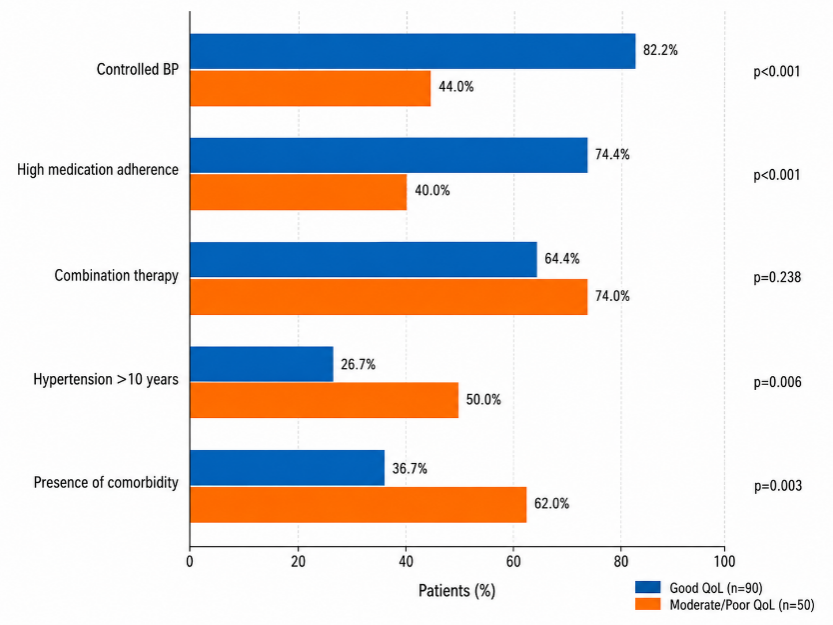
Figure 1: Comparison of clinical characteristics between patients with good and moderate/poor quality of life.
Shaista Ahmed1 | Kiran Rehman1 | Syeda Maira Gillani2*
1Department of Pathology, Farooq Hospital, Lahore, Pakistan | 2School of Biochemistry and Biotechnology, University of the Punjab, Lahore, Pakistan
*Correspondence: Syeda Maira Gillani ([email protected])
Received: 07 August, 2026; Revised: 05 September, 2026; Accepted: 11 September, 2026; Published: 20 September, 2026
Background: Hypertension is a condition that requires treatment for life and can impact patients' physical, psychological, and social health. The purpose of this study was to evaluate the health-related quality of life and related factors in patients under long-term antihypertensive treatment. Methods: his descriptive cross-sectional study (n=140) included adult patients undergoing antihypertensive treatment for at least one year via consecutive sampling technique. A structured questionnaire and medical-record review were used to collect data regarding demographic and clinical features, treatment regimen, adherence to treatment, blood-pressure control, quality of life, and treatment-related problems. The WHOQOL-BREF was used to measure health-related quality of life. Data were analysed with descriptive statistics and Chi square / Fisher exact test (p<0.05) using SPSS version 26.0. Results: The mean age was 58.6 ± 11.2 years, and 77(55.0%) were female. 95(67.9%) used combination therapy, and 96(68.6%) achieved controlled blood pressure. Overall, 90(64.3%) participants had a good quality of life. Patients with good quality of life were more likely to have controlled blood pressure and higher medication adherence rates than those with moderate/poor quality of life (74 (82.2%) vs. 22 (44.0%), p<0.001; 67 (74.4%) vs. 20 (40.0%), p<0.001, respectively). Poor quality of life was associated with hypertension (which persisted more than 10 years) and comorbidity. The most frequent problem was difficulty with lifestyle modification 48 (34.3%). Conclusions: The quality of life was good in most patients, but physical functioning and vitality continued to be problematic.
Keywords: Antihypertensive Agents; Blood Pressure; Hypertension; Lifestyle; Medication Adherence; Quality of Life
Hypertension represents one of the most significant modifiable risk factors for cardiovascular disease, stroke, kidney disease, disability, and premature death 1. Around 1.28 billion adults aged 30–79 years in the world suffered from hypertension in 2019, but blood-pressure control was accomplished in just 23% of women and 18% of men with hypertension 2. Despite the cardiovascular and mortality benefits of long-term antihypertensive therapy, treatment is often lifelong and may affect patients' functional status, treatment burden, and health perceptions 3.
Health-related quality of life (HRQoL) is a multi-dimensional outcome that includes physical, psychological, social and environmental health 4. WHOQOL-BREF is a valid, cross-culturally reliable tool to measure these domains 5. The earlier meta-analytic studies demonstrated that adults with hypertension have significant impairments in physical and mental HRQoL 6. These impairments can be due to awareness of disease, long-term treatment, side-effects of medication, functional restrictions and the cumulative impact of ageing and chronic disease 7. However, patient-centered assessment is critical to antihypertensive treatment, as it can have adverse effects including hypotension, syncope, electrolyte abnormalities and acute kidney injury 8. The key factors for successful long-term management are blood-pressure control and taking medications as prescribed 9. Improved adherence has been linked to better HRQoL, and controlled blood pressure is closely linked to better HRQoL outcomes 10. However, there is still a high non adherence rate among Asian populations, and it is associated with a higher risk of cardiovascular mortality and all-cause mortality 11.
HRQoL may be further decreased due to comorbidities, longer disease duration, complicated treatment schedules, and poor adherence to recommended lifestyle changes 12. Although there is increasing evidence from around the world that integrates HRQoL with adherence, blood-pressure control, treatment regimen, disease duration, comorbidities, and treatment-related difficulty, data on these measures are limited in many local contexts 13. The current study aimed to evaluate the HRQoL in adults who had been on antihypertensive treatment for at least one year. It also explored factors related to good HRQoL, such as adherence to medications and control of blood pressure.
An analytical cross-sectional study was conducted among adult patients receiving long-term antihypertensive therapy in the medical outpatient department of Farooq Hospital Lahore over a six-month period (January 2023 to June 2023). The consecutive sampling technique was used to select eligible participants. A total of 140 patients receiving long-term antihypertensive therapy were included in the study. The sample size was calculated using OpenEpi, Version 3.0.0 (Emory University, Atlanta, GA, USA; RRID:SCR_021913) based on an estimated prevalence of 50%, a 95% confidence level, and a 7.5% absolute precision, with a design effect of 1. The sample size was calculated using the formula n = Z2(1-P)/e2, where n represents the required sample size, Z is the standard normal deviate corresponding to the confidence level, P is the estimated prevalence, and e is the absolute precision. The calculated minimum sample size was approximately 171 participants; however, 140 eligible participants were ultimately recruited for the study 14. Participants aged ≥30 years, had a documented diagnosis of essential hypertension and had been receiving antihypertensive treatment continuously for at least one year. Patients with critical illnesses (end-stage renal disease, advanced heart failure, severe cognitive impairment, and hypertensive emergencies) were excluded. Patients who were unable to participate in the interview or provide reliable responses were also excluded.
Data were collected by a face-to-face interview with a structured and pretested questionnaire, and a review of the medical records. Data collected were: Age, sex, hypertension duration, number of chronic conditions, hypertension medications, medication duration, blood pressure, medication compliance, and self-reported challenges with hypertension medication. Blood pressure was measured after at least 5 minutes of seated rest using a validated automated sphygmomanometer. Two measurements were obtained at one-minute intervals, and the mean was recorded. Medication adherence was measured using a validated drug adherence assessment tool and categorized as high, moderate, and low.
The WHOQOL-BREF is a 26-item instrument assessing four domains: physical health, psychological health, social relationships, and environment, as well as overall perception of quality of life and general health 15. Transformation into domain scores was done on the basis of WHO recommendations, and participants were divided into good overall quality of life and moderate/poor domain scores according to the previously established scoring criteria. The data were initially entered into Microsoft Excel (Microsoft Corporation, Redmond, WA, USA) and subsequently analyzed using SPSS Statistics, Version 25.0 (IBM Corp., Armonk, NY, USA). Data for categorical variables are presented as frequencies and percentages, and for continuous variables as mean ± SD. The Chi-square test or Fisher's exact test was used to determine the association between quality of life and selected clinical variables as appropriate. The p-value was interpreted as statistically significant if < 0.05 on both sides. Before the start of the study, the study was approved by the Institutional head and all participants followed the written informed consent. The information of the participants was kept confidential throughout the research process according to the ethical principles outlined in the Declaration of Helsinki 16.
A total of 140 patients receiving long-term antihypertensive therapy were included in the study. The mean age was 58.6 ± 11.2 years, and 77(55.0%) were female. Median treatment duration of hypertension was 8 years, and 95(67.9%) of patients were on combination antihypertensive treatment. There was a relatively high level of overall good quality of life 90 (64.3%) and moderate or poor overall quality of life 53 (35.7%). The most impacted domains of quality of life were physical functioning and vitality. Improved quality of life was significantly associated with better BP control and high medication adherence (p<0.05). Table I showed that nearly 105 (75%) had a long duration of hypertension (5 years or more), suggesting that a high proportion of patients were receiving hypertension treatment for a long duration.
| Variable | Frequency (n) | Percentage (%) |
|---|---|---|
| Age Group (years) | ||
| 30–44 | 18 | 12.9 |
| 45–59 | 56 | 40.0 |
| ≥60 | 66 | 47.1 |
| Gender | ||
| Male | 63 | 45.0 |
| Female | 77 | 55.0 |
| Duration of Hypertension | ||
| <5 years | 35 | 25.0 |
| 5–10 years | 56 | 40.0 |
| >10 years | 49 | 35.0 |
| Mean age (years) | 58.6 ± 11.2 | |
| Mean systolic BP (mmHg) | 136.8 ± 14.5 | |
Treatment with antihypertensive drugs was more likely to be combination therapy 95 (67.9%) than to be monotherapy. ACE inhibitors or ARBs 84 (60.0%) were the top drug class prescribed, with calcium channel blockers 69 (49.3%) and diuretics 58 (41.4%) being the other most common classes, evidencing contemporary patterns of drug use for hypertension management, as shown in Table II. A considerable proportion of participants had been receiving antihypertensive treatment for more than 5 years.
| Variable | Frequency (n) | Percentage (%) |
|---|---|---|
| Monotherapy | 45 | 32.1 |
| Combination therapy | 95 | 67.9 |
| ACE inhibitors/ARBs | 84 | 60.0 |
| Calcium channel blockers | 69 | 49.3 |
| Beta blockers | 41 | 29.3 |
| Diuretics | 58 | 41.4 |
| Treatment duration >5 years | 92 | 65.7 |
Overall, the participants reported a good quality of life in 90 (64.3%) of cases. Social functioning was the least compromised aspect of well-being, and vitality and physical functioning were most affected by long-term hypertension and its treatment, as shown in Table III. These findings suggest that prolonged hypertension and its treatment may affect selected functional domains more substantially than others.
| Quality of life category | Frequency (n) | Percentage (%) |
|---|---|---|
| Good QoL | 90 | 64.3 |
| Moderate/Poor QoL | 50 | 35.7 |
| Total | 140 | 100.0 |
The adherence to medications was high in 87 (62.1%) of the participants, and 96 (68.6%) of the participants were able to show controlled blood pressure. About one-fifth 27 (19.3%), however, said that they do not take their medicine every week or not at all. Hence, there were adherence issues, as shown in Table IV. These findings provide an important clinical context for examining the relationship between treatment adherence, blood pressure control, and quality of life.
| Variable | Frequency (n) | Percentage (%) |
|---|---|---|
| High medication adherence | 87 | 62.1 |
| Moderate adherence | 35 | 25.0 |
| Low adherence | 18 | 12.9 |
| Controlled blood pressure | 96 | 68.6 |
| Uncontrolled blood pressure | 44 | 31.4 |
| Missed medication ≥1 time/week | 27 | 19.3 |
As shown in Table V, good quality of life was significantly related to controlled blood pressure (p<0.001) and high adherence with medication (p<0.001). However, hypertension duration was found to be significant, as was the presence of comorbid conditions with respect to the quality of life, whereas no significant correlation was found with treatment type.
| Variable | Good QoL (n=90) | Moderate/Poor QoL (n=50) | p-value |
|---|---|---|---|
| Controlled BP | 74 (82.2%) | 22 (44.0%) | <0.001 |
| High medication adherence | 67 (74.4%) | 20 (40.0%) | <0.001 |
| Combination therapy | 58 (64.4%) | 37 (74.0%) | 0.238 |
| Hypertension >10 years | 24 (26.7%) | 25 (50.0%) | 0.006 |
| Presence of comorbidity | 33 (36.7%) | 31 (62.0%) | 0.003 |
Figure 1 compares selected clinical characteristics between patients with good quality of life and those with moderate or poor quality of life. Controlled blood pressure was more frequently observed among participants with good quality of life than among those with moderate or poor quality of life. Similarly, high medication adherence was more common in the good-quality-of-life group. These differences correspond with the significant associations observed between blood-pressure control, medication adherence, and overall quality of life.
Figure 1: Comparison of clinical characteristics between patients with good and moderate/poor quality of life.
The most prevalent problems were lack of adherence to lifestyle modifications 48 (34.3%), long-term consequences 27 (19.3%), and forgetting to take medications daily 29 (20.7%). Less frequently mentioned were financial problems and frequent clinic visits, as shown in Table VI. These findings highlight several practical barriers that may influence sustained treatment and self-management.
| Challenge | Frequency (n) | Percentage (%) |
|---|---|---|
| Remembering daily medication | 29 | 20.7 |
| Medication cost | 23 | 16.4 |
| Fear of long-term adverse effects | 27 | 19.3 |
| Lifestyle modification difficulty | 48 | 34.3 |
| Frequent clinic visits | 13 | 9.3 |
The findings indicate that quality of life among patients receiving long-term antihypertensive therapy is influenced by both clinical and treatment-related factors. Blood pressure control and medication adherence were positively associated with better quality of life, whereas prolonged hypertension and comorbid conditions were associated with poorer outcomes. The reported difficulties with lifestyle modification and medication-taking further illustrate the challenges of long-term disease management. These findings provide a basis for interpreting the observed associations in the context of existing evidence.
In this study, 64.3% of the adults on long-term antihypertensive treatment said they had a good overall quality of life (QoL). The areas with the greatest degree of preservation were social functioning, and the areas most affected were vitality and physical functioning. Controlled BP and high adherence to medications were significantly associated with good QoL; hypertension for over 10 years and having a comorbidity were associated with poorer QoL; treatment type was not significant, and the most common difficulty was with lifestyle modification. These findings are consistent with a recent global systematic review and meta-analysis showing that hypertension significantly reduces health-related quality of life. Likewise, a recent community-based study from rural Punjab, India reported poorer physical and psychological quality-of-life scores among hypertensive adults 17. Furthermore, better self-management, health literacy, and blood pressure control have been associated with improved health-related quality of life, highlighting the importance of comprehensive hypertension management 18.
Clinically important was the relationship between blood-pressure control and good or moderate and poor QoL, which were present in 82.2% and 44.0% of the good and moderate/poor groups, respectively. A similar finding was reported by Lee et al., who reported that patients who achieved blood-pressure control reported a higher level of self-rated health when compared to those who were not controlled for blood pressure 19. The high adherence group had a parallel association – 74.4% of the good-QoL group and 40.0% of the moderate/poor group. The results of comparable studies conducted in Greece and Nepal were also associated with improved adherence and more positive HRQoL 20,21. Whereas a Korean national study correlated non-adherence with anxiety/depression and mobility issues 22.
The key features of poor QoL were longer duration of hypertension and the presence of comorbidities. The intrinsic disease burden and treatment burden were reflected in the higher rate of hypertension >10 years (50.0% vs 26.7%) in the moderate/poor-QoL group as compared with the good-QoL group. Comorbidity was also more common among those with moderate/poor QoL, likely because other diseases add to the symptoms, disability, burden of medication, and psychological distress. The multicenter study in Bangladesh showed that there was a gradual decrement in EQ-5D utility scores with the progressive severity of the disease 23. The newer evidence from Bangladesh showed that clinical complexity is a critical determinant of HRQoL 24. Negative drug reactions have also been linked with poor adherence and HRQoL, highlighting the significance of treatment-tolerability assessment 25. The results of the current study did not indicate any association between combination therapy and QoL, which is similar to the findings of a Pakistani study, which found no independent association between the number of antihypertensive drugs and HRQoL 26.
The most common challenges were the difficulty with lifestyle modification (34.3%), followed by remembering medication, fear of adverse effects, treatment cost, and clinic visits. A qualitative meta-integration in 2024 identified that low medication literacy, low perceived benefits, limited access, and unintentional forgetting are common barriers to adherence 27. The evidence collected from the individual studies suggests that adopting an individualized lifestyle counselling, nurse-led management, and pharmacist counselling approach can have a positive impact on blood pressure, adherence, or QoL 28. However, exercise interventions could also have positive impacts on physical and mental QoL in hypertension patients 29.
The limitations of this study are that it has a cross-sectional, single-center design, that it was done with consecutive sampling, and the number of participants was not large enough to make this study generalizable and allow for the establishment of causality. Medication adherence was self-reported and may therefore be subject to recall bias and social-desirability bias, potentially resulting in overestimation of adherence. Multicenter prospective studies are needed in the future that incorporate repeated blood pressure measurements, continuous WHOQOL-BREF domain scores, validated adherence measures, and multivariable models. Multi-component lifestyle counselling, medication reminders, adverse-effect review and multi-disciplinary follow-up should be tested in trials with outcomes of blood-pressure control and domain-specific QoL.
Most adults receiving long-term antihypertensive therapy reported good overall quality of life, although physical functioning and vitality were comparatively more affected. Controlled blood pressure and higher medication adherence were associated with better quality of life, while longer hypertension duration and comorbidities were associated with poorer quality of life. Lifestyle modification was the most frequently reported treatment challenge. Given the cross-sectional design, these findings indicate associations rather than causal relationships. Future multicenter longitudinal studies with larger samples are warranted to confirm these relationships.

Journal of Biomolecules, Pathogenesis and Therapeutics, J Biomol Pathog Ther. 2026;2(2), p69-71 (jbptjournal.org) © 2026 Authors. This work is published by Multidisciplinary Scholarly Advancement and Research MSAR Institute. The full terms of Journal Publishing policy is available at https://jbptjournal.org/index.php/jbpt/-publishing-license and incorporate the Creative Commons Attribution – Non Commercial (CC BY, NC 4.0) License https://creativecommons.org/licenses/by-nc/4.0/. By accessing the work you hereby accept the Terms. Non-commercial uses of the work are permitted without any further permission, provided the work is properly attributed. Publisher’s Note: MSAR Institute remains neutral with regard to jurisdictional claims in published maps and institutional affiliations, and assumes no liability for the scientific accuracy or clinical efficacy of the content herein, as they rest entirely with the authors.