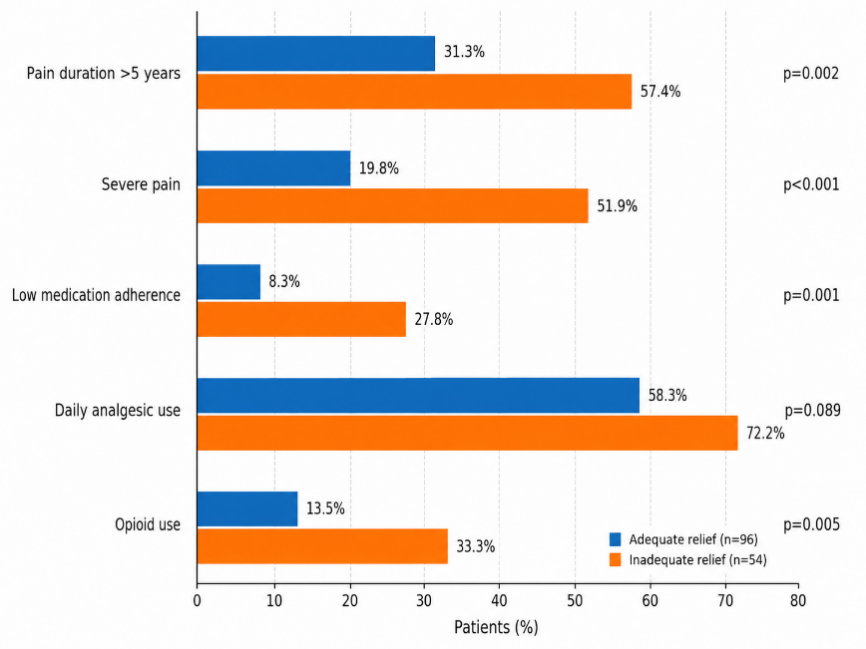
Figure 1: Comparison of factors associated with adequate and inadequate pain relief among patients with chronic pain conditions
Shaista Ahmed1 | Kiran Rehman1 | Ayisha Yousaf2*
1Department of Pathology, Farooq Hospital, Lahore, Pakistan | 2School of Biochemistry and Biotechnology, University of the Punjab, Lahore, Pakistan
*Correspondence: Ayisha Yousaf ([email protected])
Received: 05 August, 2026; Revised: 05 September, 2026; Accepted: 10 September, 2026; Published: 20 September, 2026
Background: Chronic pain significantly impacts physical, emotional, and quality of life. The primary objective of this study was to assess the use of analgesics, response to the treatment, adherence to treatment, side effects, and satisfaction of adults suffering from chronic pain conditions. Methods: This cross-sectional study (n=150) included the adults with pain for at least 3 months who attended the pain management, orthopaedics, neurology, and rheumatology outpatient clinics at a tertiary care hospital. Those who participated were recruited in a six-month consecutive manner. A structured interview-administered questionnaire and medical-record review were used to collect the data. Data were presented as descriptive statistics, and associations between patient factors and pain-relief outcomes were tested by Chi-square or Fisher’s exact tests. A p-value of under 0.05 was deemed to be statistically significant. Results: Participants' mean age was 52.7±13.1 years, of which 87(58.0%) were women. The most common type of pain condition was musculoskeletal pain 70(46.7%). NSAIDs were the drugs most commonly used 64(42.7%), followed by Paracetamol 29(19.3%) and weak opioids 22(14.7%). 54(36.0%) patients reported inadequate pain relief. The duration of pain, intensity of pain, opioid use, and low medication adherence were significantly (p<0.05) associated with inadequate pain relief. The most frequent adverse effect 29(19.3%) was gastrointestinal-related, and 59(39.3%) of participants were satisfied, and 21(14%) were very satisfied with pain management. Conclusions: NSAIDs were the most frequently used group of medications, but were still sub optimally associated with pain control. Personalized, multi-disciplinary treatment and focus on adherence could enhance outcomes and satisfaction.
Keywords: Analgesics; Anti-Inflammatory Agents; Chronic Pain; Medication Adherence; Pain Management; Quality of Life
Chronic pain, which is pain that develops or recurs after 3 months, is a significant public health problem and can impact the physical, psychological, social, and economic health of individuals 1. Recent epidemiological studies suggest that around one in five adults in the world have chronic pain, with many developing high-impact chronic pain that impacts daily function and quality of life 2. Chronic pain is not only a disability but also associated with reduced productivity at work, health care use, anxiety and depression, and a decrease in health-related quality of life 3. Therefore, long-term pain management is a key treatment need in clinical practice, and effective and safe pain-management strategies must be developed 4.
Analgesics used for the management of nociceptive pain are usually non-steroidal anti-inflammatory drugs (NSAIDs) and paracetamol, while opioids are reserved for specific cases, as tolerance, dependence, drug abuse, and opioid-related side effects may be a concern 5. Recent systematic reviews and international guidelines stress personalized treatment of pain with analgesics based on pain mechanism, comorbidities, functional goals, and patient preferences, taking into account efficacy and safety 6. Analgesics can decrease the intensity of the pain and improve function, yet evidence shows most patients do not get sufficient pain relief despite ongoing analgesic therapy 7. Often, treatment outcomes are suboptimal due to medication non-adherence, inappropriate selection of analgesics, extended exposure to NSAIDs, risks of opioid use, and adverse drug reactions 8.
Gastrointestinal side effects are one of the most common side effects of NSAIDs, and long-term use of opioids can lead to addiction and other serious safety risks 9. In addition, inadequate compliance with recommended pain management protocols has repeatedly been shown to be linked with inadequate pain control and patient dissatisfaction 10. Although there has been growing evidence in chronic pain management, there is a lack of research that simultaneously assesses analgesic prescription, adherence, adverse events, efficacy, and patient satisfaction in the same population within low- and middle-income countries. Awareness of the patterns and outcomes of use is crucial to help identify areas for improvement in pain management and to guide evidence-based prescribing practices 11.
Thus, the purpose of the present study was to assess the trends of analgesic consumption in chronic pain patients. It also aimed to evaluate treatment efficacy, adherence to treatment, side effects, and patients' satisfaction, and to determine factors linked to inadequate pain management.
An analytical cross-sectional study was conducted on 150 adult patients who had been attending chronic pain clinics, orthopedic clinics, neurology and rheumatology outpatient clinics of the affiliated tertiary care hospital Lahore (September 2022 to February 2023). A consecutive sampling technique was used for the recruitment of patients. The sample size was calculated using OpenEpi, Version 3.0.1 (Emory University, Atlanta, GA, USA; RRID:SCR_021913), assuming a 50% prevalence of inadequate pain relief, a 95% confidence level, and an 8% margin of error 12. The sample size was calculated using the formula n = Z2(1-P)/e2, where n represents the required sample size, Z is the standard normal deviate corresponding to the confidence level, P is the expected prevalence, and e is the margin of error. Eligible Adults (age 18 and older) included adults who reported pain for 3 months or longer. Insufficient data to provide a clinical assessment and severe psychiatric disease and cognitive dysfunction were exclusion criteria, as were patients with acute postoperative pain or with pain directly related to the cancer.
Data were collected by a face-to-face interview using a structured and pretested questionnaire and medical records. Demographic data, pain diagnosis, pain duration, pain intensity, current analgesic medications, their dosage, frequency of use, duration of use, adherence to treatment, any adverse effects self-reported, pain relief, and satisfaction with treatment were all obtained. The primary outcome was inadequate pain relief, defined as patient-reported pain relief of less than 30% following analgesic treatment, based on the standardized numerical pain rating scale. A standardised numerical pain rating scale was used to classify the pain as mild, moderate, or severe. Patients' adherence with medication was measured by a validated adherence questionnaire and was categorized as high, moderate, and low.
Analgesics were grouped into Paracetamol, non-steroidal anti-inflammatory drugs (NSAIDs), weak opioids, strong opioids, combination of analgesics, and topical preparations. The clinical outcome measures included: pain relief, disruption of sleep, reduction in activities, and patient satisfaction with pain management.
The Statistical Package for the Social Sciences IBM SPSS Statistics, Version 26.0 (Released 2019; IBM Corp., Armonk, NY, USA; RRID:SCR_016479) was used to enter and analyse the data. Mean ± SD or median (IQR) was used for continuous variables and frequencies and percentages for categorical variables. The Chi-square test or Fisher's exact test was used to determine if there were any associations between patient characteristics and treatment outcome. A two-tailed p-value < 0.05 was taken as statistically significant. The study was given ethical clearance from the IRB before the start of the research. In line with the ethical guidelines of the Declaration of Helsinki, all participants gave informed consent, and information regarding their patients was kept confidential throughout the conduct of this research 13.
The total number of patients included in this study was 150. The mean age was 52.7 ± 13.1 years, and 58.0% were female. MSD 70(46.7%) was the most frequent cause of chronic pain, followed by osteoarthritis (24.7%) and neuropathic pain 27(18.0%). Non-steroidal anti-inflammatory drugs (NSAIDs) were the most commonly used analgesics 64(42.7%), and 36.0% of participants indicated that they were not properly relieved of pain even with the drugs currently in use. As shown in Table I, the most common pain condition included was musculoskeletal disorders (46.7%), followed by those associated with osteoarthritis (24.7%) and related to neuropathic pain (18.0%). This is the median pain duration, indicative of long-standing disease (4.8 years).
| Variable | Frequency (n) | Percentage (%) |
|---|---|---|
| Age Group (years) | ||
| 18–39 | 27 | 18.0 |
| 40–59 | 71 | 47.3 |
| ≥60 | 52 | 34.7 |
| Gender | ||
| Male | 63 | 42.0 |
| Female | 87 | 58.0 |
| Primary Pain Condition | ||
| Musculoskeletal disorders | 70 | 46.7 |
| Osteoarthritis | 37 | 24.7 |
| Neuropathic pain | 27 | 18.0 |
| Chronic low back pain | 16 | 10.6 |
| Mean age (years) | 52.7 ± 13.1 | |
| Median pain duration | 4.8 years | |
Table II presents the pattern of analgesic utilization among patients with chronic pain. NSAIDs were the most frequently used analgesics 64(42.7%) followed by paracetamol 29(19.3%) and weak opioids 22(14.7%). Almost two-thirds of the participants had chronic pain, which was present continuously and required daily analgesic use, underscoring the need for chronic pain to be treated continuously through pharmacologic means.
| Variable | Frequency (n) | Percentage (%) |
|---|---|---|
| NSAIDs | 64 | 42.7 |
| Paracetamol | 29 | 19.3 |
| Weak opioids | 22 | 14.7 |
| Strong opioids | 9 | 6.0 |
| Combination analgesics | 18 | 12.0 |
| Topical analgesics | 8 | 5.3 |
| Daily analgesic use | 95 | 63.3 |
| As-needed use | 55 | 36.7 |
| Analgesic categories represent the primary/current analgesic regimen and are mutually exclusive. Combination analgesics refer to participants receiving a combination regimen. | ||
Moderate pain was the most prevalent (54.0%), and 31.3% of the patients experienced severe pain. Of people who were still being treated, 36.0% reported that treatment wasn't giving them the pain relief they needed. Pain was a significant restriction on quality of life, with 58.7% of people reporting restrictions in daily activities and 48.7% of people having disturbed sleep, as shown in Table III. Although most patients reported adequate pain relief, a substantial proportion continued to experience inadequate relief. Pain-related sleep disturbance and limitations in daily activities were also frequently reported.
| Variable | Frequency (n) | Percentage (%) |
|---|---|---|
| Mild pain | 22 | 14.7 |
| Moderate pain | 81 | 54.0 |
| Severe pain | 47 | 31.3 |
| Adequate pain relief | 96 | 64.0 |
| Inadequate pain relief | 54 | 36.0 |
| Sleep disturbance due to pain | 73 | 48.7 |
| Daily activity limitation | 88 | 58.7 |
As shown in Table IV, most participants, 83(55.3%) were considered to be high adherers to medications. The common side effects reported were gastrointestinal 29(9.3%), drowsiness 18(12.0%), and constipation 11(7.3%). In all, 92(61.4%) had no adverse effects related to medications while being treated. More than half of the patients demonstrated high medication adherence, while smaller proportions showed moderate or low adherence.
| Variable | Frequency (n) | Percentage (%) |
|---|---|---|
| High adherence | 83 | 55.3 |
| Moderate adherence | 44 | 29.3 |
| Low adherence | 23 | 15.4 |
| Reported gastrointestinal symptoms | 29 | 19.3 |
| Drowsiness | 18 | 12.0 |
| Constipation | 11 | 7.3 |
| No adverse effects | 92 | 61.4 |
In bivariate analysis, inadequate pain relief was significantly associated with pain duration >5 years, severe pain, low medication adherence, and opioid use (all p<0.05). Compared with patients with pain duration ≤5 years, those with pain duration >5 years had higher odds of inadequate pain relief (OR, 2.97; 95% CI, 1.49–5.92; p=0.002). Severe pain was also associated with increased odds of inadequate pain relief (OR, 4.36; 95% CI, 2.10–9.08; p<0.001). Low medication adherence was associated with higher odds of inadequate pain relief (OR, 4.23; 95% CI, 1.66–10.80; p=0.001), as was opioid use (OR, 3.19; 95% CI, 1.42–7.20; p=0.005). Daily analgesic use was not significantly associated with inadequate pain relief (OR, 1.86; 95% CI, 0.90–3.82; p=0.089) (Figure 1).
Figure 1: Comparison of factors associated with adequate and inadequate pain relief among patients with chronic pain conditions
Satisfaction with pain management is moderate; 80(53.3%) of the participants were satisfied or highly satisfied). Still, about one-fourth 31(24.0%) were not satisfied, presenting potential to enhance pain management strategies and individualized treatment approaches, a shown in Table V. Overall, the findings indicate that although satisfaction was relatively favorable, a substantial proportion of patients remained neutral or dissatisfied with their pain management.
| Satisfaction Level | Frequency (n) | Percentage (%) |
|---|---|---|
| Very satisfied | 21 | 14.0 |
| Satisfied | 59 | 39.3 |
| Neutral | 34 | 22.7 |
| Dissatisfied | 28 | 18.7 |
| Very dissatisfied | 8 | 5.3 |
Overall, the findings demonstrate substantial analgesic use among patients with chronic pain, with NSAIDs representing the most frequently used medication class. Despite generally high medication adherence and adequate pain relief in most participants, inadequate pain control remained evident in a considerable proportion of patients. Longer pain duration, greater pain severity, opioid use, and lower medication adherence were associated with poorer treatment outcomes. These findings provide a basis for considering the clinical and treatment-related factors that may influence pain management in this population.
The present study revealed that women accounted for 58.0% of the participants, musculoskeletal disorders were the most prevalent type of pain (46.7%), and the most commonly used analgesics were the nonsteroidal anti-inflammatory drugs (42.7%). Although treated, 36.0% said they were not adequately treated for pain; this was significantly linked to pain lasting longer than five years, severe pain, opioid use, and low adherence to medications, comparable with the findings of Amjad et al., who reported that only 67% of Pakistani patients receiving active treatment considered their medication effective 14. The gastrointestinal side adverse effects were the most commonly reported side effects, and 53.3% of patients were satisfied or very satisfied with their pain management 15. The difference in gender (female) is also consistent with epidemiological research that generally reports higher instances of chronic pain among women and older adults 16.
Several oral NSAIDs were shown to benefit pain and physical function in patients with knee or hip osteoarthritis, but not all showed a benefit and the benefit varied by each individual treatment 17. NSAIDs were also reported by Machado et al. to have statistically significant, but clinically small benefits for spinal pain when compared to placebo treatment 18. The use of paracetamol was also relatively low, 19.3%, which is similar to the results of a systematic review, which indicated that there was minimal difference in pain and function between patients with knee or hip osteoarthritis who used paracetamol and those who did not 19. However, differences in patient populations, pain conditions, treatment indications, and prescribing practices should be considered when comparing these findings with previous studies.
A total of 36% of participants still had inadequate pain relief, reflecting that the use of analgesics did not lead to a satisfactory level of pain relief, as shown in previous literature, which revealed that, despite undergoing treatment, patients had persistent pain and functional interference 20. Inadequate pain relief was found to be associated with opioid use, though this may be due to confounding by indication, as those with more severe or treatment-resistant pain are more likely to receive opioids, though this association should not be interpreted as evidence that opioids caused poorer pain outcomes, because confounding by indication is possible; patients with more severe, persistent, or treatment-resistant pain are more likely to receive opioid therapy. In a meta-analysis, Busse et al. reported minimal average pain and physical functioning improvement when opioids were used instead of non-opioids 21. Opioid treatment did not prove better than non-opioid medication for pain-related function in the SPACE randomized clinical trial after 12 months 22. However, because the SPACE trial was a randomized longitudinal study, its findings should be regarded as complementary evidence rather than a direct comparison with the present results. Bialas et al. also found very-low-certainty evidence on the long-term effectiveness and safety of opioid therapy 23.
Non-adherence to medications was significantly linked to poor pain management. In the study by Timmerman et al., non-adherence was found to be common and variable in patients with chronic pain 24. The gastrointestinal symptoms reported by 19.3% of the participants are in line with the meta-analytic evidence that has been reported for the association between NSAID use and upper gastrointestinal complications 25. The sleep disruption and limitation of daily activities found in this study are also consistent with previous studies, which showed a bidirectional link between sleep disruption and pain 26. The moderate treatment satisfaction correlates with the study which found that pain relief and confidence in healthcare professionals are significant factors in treatment satisfaction 27. Studies of opioid-induced constipation have also demonstrated that side effects and the absence of adequate symptom relief are harmful to people's satisfaction with pain therapy 28.
The cross-sectional, single-center design, consecutive sampling and small sample size of this study, coupled with the use of some self-reported measures, limit causal inference and generalizability. Future multicenter prospective studies with reliable measures of functional status and quality of life should investigate medication dose, treatment switching, medication duration, and functional outcomes. Adherence-support strategies and multidisciplinary interventions should also be tested in clinical trials based on the type of pain and the level of baseline pain intensity.
This study found that non-steroidal anti-inflammatory drugs (NSAIDs) were the most commonly used analgesics for patients with chronic pain, and more than one-third of the participants were not adequately relieved by their current treatment for pain. Poor medication adherence, opioid use, longer pain duration, and higher pain intensity were significantly associated with inadequate pain relief. The results emphasize the need for personalized, evidence-informed pain management strategies to maximize the use of appropriate analgesics, optimize adherence to therapy, and enhance patient satisfaction. Further multicenter longitudinal research is needed to assess the effectiveness of treatment over time and to evaluate multidisciplinary approaches for improving functional and clinical outcomes in patients with chronic pain.

Journal of Biomolecules, Pathogenesis and Therapeutics, J Biomol Pathog Ther. 2026;2(2), p69-71 (jbptjournal.org) © 2026 Authors. This work is published by Multidisciplinary Scholarly Advancement and Research MSAR Institute. The full terms of Journal Publishing policy is available at https://jbptjournal.org/index.php/jbpt/-publishing-license and incorporate the Creative Commons Attribution – Non Commercial (CC BY, NC 4.0) License https://creativecommons.org/licenses/by-nc/4.0/. By accessing the work you hereby accept the Terms. Non-commercial uses of the work are permitted without any further permission, provided the work is properly attributed. Publisher’s Note: MSAR Institute remains neutral with regard to jurisdictional claims in published maps and institutional affiliations, and assumes no liability for the scientific accuracy or clinical efficacy of the content herein, as they rest entirely with the authors.