Figure 1: Schematic diagram of CRISPR/Cas9 mechanism 13
Hira Aftab2 | Aman Ullah1* | Shakir Ahmed Khan2 | Habib Ullah3
1Department of Pathology, University of Punjab, Lahore, Pakistan | 2School of Biochemistry and Biotechnology, University of the Punjab, Lahore, Pakistan
3Department of Pathology, University of Health Sciences, Lahore, Pakistan
*Correspondence: Aman Ullah ([email protected])
Received: 23 May, 2026; Revised: 01 September, 2026; Accepted: 13 September, 2026; Published: 20 September, 2026
The emergence of CRISPR-Cas9 genome editing has now broadened the scope of precise modification of genes that play a role in biosynthesis of secondary metabolites in medicinal plants. Medicinal plants generate a variety of bioactive compounds, such as alkaloids, terpenoids, phenylpropanoids, and glucosinolates, and their biosynthesis is controlled by multifaceted pathways, often comprised of multiple genes, which could be targeted for manipulation. In this narrative review, 10 years of research about the use of CRISPR-Cas9 and other genome-editing technologies for phytochemical biosynthesis modification was discussed, and their potential for improving the production of therapeutically relevant metabolites in medicinal plants was also explored. The molecular targets examined comprise components of the methylerythritol phosphate (MEP) pathway of terpenoids, of shikimate–phenylpropanoid pathway for flavonoids and lignans, the benzylisoquinoline alkaloid (BIA) pathway, and the mechanism of Cas9 gene-disruption and transcriptional regulation. Phytochemicals have been investigated and reported in their use in Hypericum perforatum (hypericin), Cannabis sativa (cannabinoids), Catharanthus roseus (vindoline and catharanthine), and Artemisia annua (artemisinin); the degree of experimental validation and demonstrated enhancement varies between compounds and plant systems. The review also highlighted the use of base and prime editing as a higher-order editing approach, multiplex editing for pathway and metabolic-flux modulation, and recently emerging applications of base and prime editing in plant metabolic engineering. The combination of CRISPR with the tools of synthetic biology and computational metabolic modelling, along with omics-guided pathway analysis, could be a key aid for the future development of precision-based phytochemical engineering and phytomedicine biotechnology.
Keywords: Alkaloids; CRISPR-Cas Systems; Flavonoids; Genetic Engineering; Metabolic Engineering; Plants, Medicinal; Terpenes.
Plants are the original chemists. Throughout the evolutionary history of hundreds of millions of years of coevolutionary interactions with herbivores, pathogens, and abiotic stressors, the plant kingdom has accumulated an arsenal of a biochemical toolkit consisting of over 200,000 specialized secondary metabolites, many of which happen to be of immense value in human medicine 1. Morphine, paclitaxel, quinine, vinblastine, and berberine are products of evolutionary adaptations that intersect with human disease mechanisms. However, their plants do not maximize production for pharmaceutical purposes; instead, secondary metabolite levels vary with developmental programs, environmental signals, and tissue-specific gene expression networks that prioritize survival 2.
The discrepancy between the therapeutic potential of plant natural products and their agronomic and biosynthetic limitations has long frustrated pharmacological development. The conventional methods of enhancing the phytochemical yields, including selection of elite chemotypes, optimization of growth, elicitor treatment, and plant cell suspension culture, have resulted in significant though ultimately marginal improvements 3. Heterologous hosts like Saccharomyces cerevisiae and Escherichia coli have achieved breakthroughs in metabolic engineering of biosynthetic pathways, such as semi-synthetic artemisinin, but complete reconstitution of complex plant pathways in microbial systems remains technically challenging 4. The gap in technology was the one that accurately alters the endogenous genetic framework of medicinal plants themselves by editing regulatory sequences, knocking out competing branch pathways, amplifying rate-limiting enzymatic activities, and rewiring transcriptional control, all in the native cellular context where metabolic context is maintained. Despite this progress, an important gap remains between the conceptual potential of CRISPR-based metabolic engineering and its demonstrated application for improving therapeutically relevant phytochemicals in medicinal plants.
CRISPR-Cas9 emerged as a plant genome editing tool in 2013. The technology has been used in over 60 plant species with a steadily increasing efficiency, precision, and versatility. The capability to place specific double-strand breaks at any site in the genome, and then repair them via non-homologous end joining (NHEJ) or homology-directed repair (HDR), gave a level of genetic control that fundamentally altered what was impossible in the field of plant metabolic engineering 5. Recent CRISPR modalities like base editing, prime editing, CRISPR activation (CRISPRa), and CRISPR interference (CRISPRi) can do more sophisticated gene disruption and more precise transcriptional actions and single-nucleotide mutations without double-strand breaks 6. This review discussed the interrelated areas of how these technologies are being utilized in medicinal plant species with the explicit aim of improving secondary metabolite synthesis for therapeutic uses.
This narrative review was conducted using an informative literature synthesis approach that is comprehensive and structured to ensure broad coverage and guarantee transparency and reliability. Relevant studies were found using the main biomedical databases, including PubMed, Scopus, and Web of Science, which collectively index a wide range of peer-reviewed research in the pharmaceutical and biomedical domains. The search technique included validated keyword combinations, such as Alkaloids, CRISPR-Cas Systems, Medicinal plants, Terpenes, natural products, phytochemicals, and molecular targets, which were then further filtered using Boolean operators. Representative keywords included “CRISPR-Cas9,” “CRISPR-Cas systems,” “genome editing,” “medicinal plants,” “phytochemicals,” “secondary metabolites,” “alkaloids,” “terpenoids,” “phenylpropanoids,” “flavonoids,” “natural products,” “metabolic engineering,” and “molecular targets.” To ensure that the most recent scientific evidence would be included, peer-reviewed original research papers, systematic reviews, and meta-analyses were incorporated. Particular attention was given to distinguishing experimentally demonstrated changes in phytochemical production from proposed or indirect effects based on pathway regulation or gene-expression changes.
To preserve scientific rigor, research that was not found to be experimentally confirmed, that was not written in English, and that was not peer-reviewed was excluded. Molecular mechanisms, therapeutic, and clinical significance of enhanced phytochemical production served as the foundation for data extraction. In accordance with the application of narrative review criteria, critical appraisal was also conducted by examining the study design, sample size, reproducibility, and methodology quality.
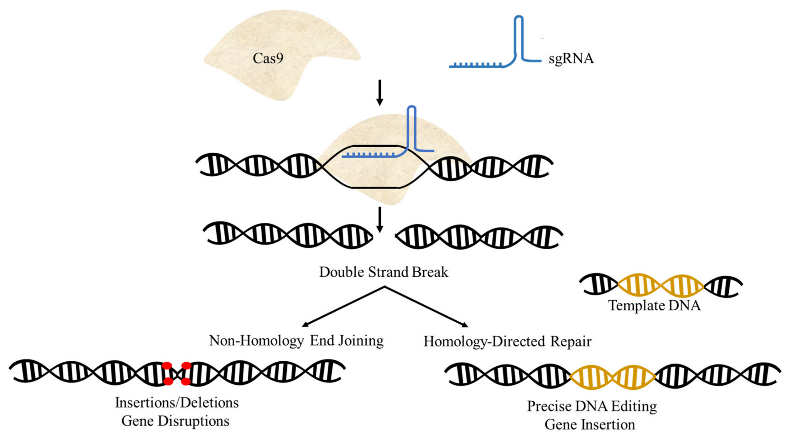
The CRISPR-Cas9 Mechanism and the Plant Genome Editing Toolbox: CRISPR-Cas9 is an RNA-guided endonuclease system, repurposed by the adaptive immune system of Streptococcus pyogenes. The Cas9 protein, with a chimeric single-guide RNA (sgRNA) that consists of a 20-nucleotide spacer sequence complementary to the genomic target and a scaffold RNA, binds to the target DNA flanking a protospacer adjacent motif (PAM, 5'-NGG-3') and creates a blunt-ended double-strand break (DSB). Without a repair template, the DSB is repaired by NHEJ, which is a nonspecific repair mechanism that introduces deletions or insertions (indels) that cause a frameshift mutation and gene knockout, the simplest method to remove competing enzymatic crossroads in biosynthetic pathways. HDR has the ability to insert specific sequence changes when a homologous donor template is present, as shown in Figure 1.
Figure 1: Schematic diagram of CRISPR/Cas9 mechanism 13
In plants, HDR is much less efficient than NHEJ, depending on tissue type, cell cycle phase, and species 7. The plant genome editing toolbox has grown substantially since the initial reports of the effectiveness of CRISPR in Arabidopsis thaliana and tobacco. The Streptococcus pyogenes Cas9 (SpCas9) versions with modified PAM specificities include xCas9 and SpCas9-NG with NG PAM specificities, collectively increasing the targetable genome space to near-universal coverage 8. Variants of Cas9, such as eSpCas9 and HiFi Cas9, are high-fidelity and have significantly minimized off-target editing effects, which are significant in medicinal plants where the random mutation of pathway genes may have unexpected metabolic effects 9. Cpf1 (Cas12a), which makes staggered cuts and only needs a crRNA, not a dual-guide system, has been especially useful in multiplex editing applications in plants because of its ability to cleave multiple guide RNAs using a single precursor transcript.
Base editors are designed CRISPR systems where catalytically inactive variants of Cas9 (nickases or dead Cas9) are fused to cytidine or adenine deaminases, allowing single-nucleotide base conversions (C to T or A to G) to be performed with a defined editing window without the formation of any double-strand breaks, greatly reducing the probability of chromosomal rearrangements. The strategies of genome editing have been successfully applied to large crops like rice, wheat, and maize, and are now being investigated for application in medicinal plant systems 10, 11. CRISPRa systems based on the use of transcriptional activators (VPR, SAM, Suntag) fused to dCas9 are capable of upregulating rate-limiting biosynthetic genes without causing changes in their sequences, whereas CRISPRi systems based on the use of repressor domains achieve the opposite, along with a regulatory layer of unprecedented flexibility in the control of metabolic pathways 12.
Delivery Strategies for Genome Editing Components in Plant Systems: Efficient delivery of CRISPR-Cas9 components into plant cells to achieve stable heritable gene modifications in regenerable tissue is the most challenging aspect in plant genome engineering, especially in medicinal plants, where the protocol for their tissue culture and regeneration may be relatively poorly established compared to major crop species 14. Three major methods constitute the delivery strategies that are commonly used, each with its strengths and weaknesses that need to be carefully considered in light of the characteristics of the host plants.
Transformation using Agrobacterium tumefaciens represents the gold standard for efficient introduction of foreign genes in susceptible dicotyledonous plant species, which happen to include most medicinal plants. The natural ability of the bacterium to integrate T-DNA regions of its Ti plasmid into the nuclear genomes of plants is harnessed to efficiently transfer CRISPR-based constructs in susceptible species. Agrobacterium transformation of medicinal plants has been successful with Catharanthus roseus, Nicotiana tabacum, Hypericum perforatum, and Solanum lycopersicum 15. However, because of the integration of T-DNA into the genome, there are legal issues regarding whether such an organism can be categorized as a genetically modified organism (GMO) that is based on the technology rather than the product. A recent trend in avoiding this problem is utilizing Agrobacterium to introduce CRISPR components transiently, followed by regeneration of edited plants lacking T-DNA, yielding transgene-free edited plants that may face a lighter regulatory burden 16.
The gene gun or biolistic delivery system propels gold or tungsten particles covered with DNA or ribonucleoproteins (RNPs) into plant cells, with the benefit of being species-independent and effective on monocots and gymnosperms, which are refractory to Agrobacterium-mediated transformation. The RNP delivery system, where pre-assembled Cas9 protein combines with sgRNA, is more appealing since the editing elements are temporary, degraded by the cellular proteases and nucleases within days, reducing off-target effects and not integrating any stably transgenic sequences at all 17. The technique has yielded transgene-free edited plants for wheat, potato, and grapevine, and is being tested for Cannabis sativa and Papaver somniferum, whose regeneration protocols after biolistic treatments are constantly improving 18.
Nanoparticle-based delivery has emerged as the latest and perhaps the most exciting avenue for CRISPR delivery in plants. Carbon nanotubes, mesoporous silica nanoparticles (MSNPs), lipid nanoparticles, and layered double hydroxide (LDH) clay nanosheets have all proven capable of penetrating plant cell walls through passive diffusion through plasmodesmata or wall pores without the need for physical damage to the tissue or protoplast isolation 19. MSNP-loaded Cas9-sgRNA RNPs were successful in editing wheat leaves without causing any disruption in another pioneering study, and LDH nanosheets have been demonstrated to effectively transfect chloroplasts, suggesting that plastid genome editing is possible without employing biolistics. For woody medicinal plants like Taxus species, Camptotheca acuminata, whose regeneration from transformed tissue is difficult, nanoparticle delivery to intact tissues without regeneration may ultimately be the only practical editing route 20.
Mapping and Targeting Secondary Metabolite Biosynthetic Pathways: The understanding of the biosynthesis process involved in the target secondary metabolite production served as an important foundation for metabolic engineering and has only become apparent by methods such as transcriptomics, metabolomics, stable isotope labeling, and heterologous functional expression. Genome-scale metabolic models (GEMs) are being developed for model plant species, and due to their integration, even in medicinal plant species using multi-omics approaches, computational predictions of effects due to gene knockout or overexpression are now feasible before conducting experimental work 21.
Terpenoid biosynthesis in higher plants involves two different pathways for providing isopentenyl pyrophosphate (IPP) and dimethylallyl pyrophosphate (DMAPP), the precursors required for all terpenoid secondary metabolites, namely monoterpene indole alkaloids, diterpenes, sesquiterpenes, and triterpenes, as shown in Figure 2. Important rate-limiting reactions for the methylerythritol 4-phosphate pathway (MEP) are catalysed by 1-deoxy-D-xylulose 5-phosphate synthase (DXS) and 1-deoxy-D-xylulose 5-phosphate reductoisomerase (DXR) 22. These two reactions would benefit from CRISPRa-based overexpression techniques. Squalene synthase (SQS) competes with sesquiterpene synthases for the common substrate FPP; SQS knockout is an effective NHEJ strategy to redirect flux toward target sesquiterpenes.
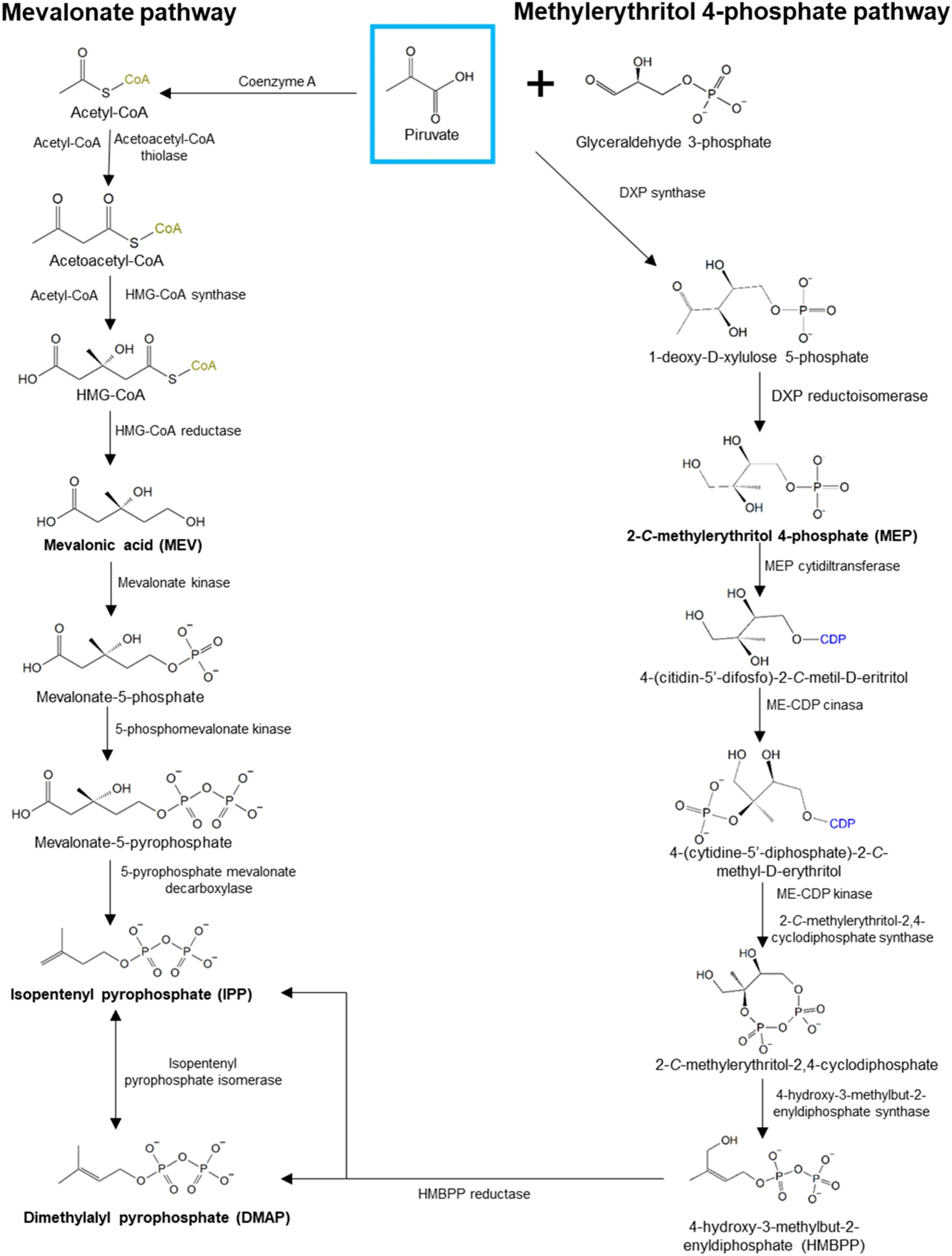
Figure 2: Biosynthesis of IPP and DMPP in the Mevalonate Pathway (MVA) (left); 2-C-methylerythritol-4-phosphate pathway (MEP) (right) in plants 27
The shikimate-phenylpropanoid pathway, which produces not only phenylalanine but also a diverse range of flavonoids, lignans, coumarins, and stilbenes, is another possible target for CRISPR-based modification. The first enzyme in the shikimate-phenylpropanoid pathway, phenylalanine ammonia lyase (PAL), is highly regulated on the transcriptional level via MYB, bHLH, and WD40 transcription factors 23. Alternative pathways that direct the flow of carbon away from an essential flavonoid towards lignin biosynthesis via cinnamoyl-CoA reductase (CCR) and caffeic acid O-methyltransferase (COMT) can be inhibited to allow more carbon to flow into the biosynthesis of medically important flavonoids. The benzylisoquinoline alkaloid pathway (BIA) in Papaver somniferum and closely related plants is one of the most complicated routes, requiring at least 15 different enzymatic steps from tyrosine to morphine, which are under strict control at the transcriptional level in the specialized cells of the phloem 24.
Recent studies using single-cell transcriptomics and spatial metabolomics approaches have demonstrated that many medicinal plants localize the biosynthesis of secondary metabolites in different cell types, where early steps are localized to one cell type and late steps to a different cell type 25. Engineering such spatial localization presents both new difficulties and possibilities in metabolic engineering, as CRISPR-mediated editing of genes involved in intercellular transport can help improve the accumulation of metabolites in specific cell compartments within the plant. In the case of Catharanthus roseus, it is well known that the MIA pathway localizes to different cell compartments in epidermal, internal phloem-associated parenchyma (IPAP), idioblast cells 26. Manipulation of vacuolar trafficking genes using CRISPR has been shown to influence the subcellular localization of vindoline and catharanthine and their ability to be combined into vinblastine.
CRISPR Engineering of Alkaloid Biosynthesis: Alkaloids represent pharmacological importance among plant secondary metabolites, and their biosynthetic pathways are one of the main focuses in CRISPR-mediated metabolic engineering applications. The BIA and MIA families have seen important CRISPR interventions, which include morphine and codeine from Papaver somniferum, berberine from Coptis japonica, noscapine from P. somniferum, vinblastine and vincristine from Catharanthus roseus, and camptothecin from Camptotheca acuminata 28.
A significant study carried out on P. somniferum, the opium poppy, in 2021 saw the application of CRISPR-Cas9 to knock out the gene for reticuline epimerase (REPI), the enzyme involved in the transformation of (S)-reticuline to (R)-reticuline, a critical point determining whether metabolism will proceed toward morphine or noscapine synthesis 29. Plants where REPI expression was knocked out exhibited an extremely high accumulation of (S)-reticuline and metabolites of the sanguinarine pathway at the expense of decreased morphine and codeine content, which showed that a single CRISPR modification is enough to redirect an entire metabolic pathway. Another example is editing noscapine production by targeted activation of the poppy CYP82Y2 gene by ~40%, responsible for the first stage of N-formylation during noscapine biosynthesis, an outcome of interest given noscapine's emerging antitumor activity 30.
In Catharanthus roseus, CRISPR-Cas9 inhibition of the gene encoding the early MIA pathway enzyme, geraniol 10-hydroxylase (G10H), confirmed the functionality of the gene, as well as emphasizing the importance of editing a metabolic pathway in a specific direction to enhance production 31. The transcription factor BIS1 acts as a positive regulator of the monoterpenoid indole alkaloid (MIA) pathway, activating genes involved in iridoid biosynthesis. Vindoline and catharanthine, the key intermediates of this pathway, undergo oxidative coupling to form the antileukemic compounds vinblastine and vincristine 32. Considering that vinblastine sells for more than USD 10,000/kg and is a constituent of the WHO Essential Medicines List, even a 50% enhancement in its production would have substantial pharmaceutical and public health implications.
Camptothecin, a topoisomerase I inhibitor derived from Camptotheca acuminata and Ophiorrhiza pumila, is synthesized via the monoterpenoid indole alkaloid pathway. Secologanin synthase (SLS) catalyzes a key step in secologanin formation, which is required for the production of strictosidine, the central precursor of this pathway. Suppression of SLS in O. pumila hairy roots results in reduced accumulation of strictosidine and downstream alkaloids, confirming its essential role in camptothecin biosynthesis 33. Upregulation of important biosynthetic genes including geraniol synthase (GES), and expression factors such as ORCA3 are promising control measures that can be used to boost the production of monoterpenoid indole alkaloids 34. CRISPR-based activation mechanisms could be utilized to enhance pathway flux through intermediates like strictosidine, which may enhance camptothein accumulation downstream.
Engineering Terpenoid and Phenylpropanoid Pathways: Terpenoids constitute the largest family of secondary metabolites found in plants, encompassing more than 80,000 chemical entities ranging from monoterpenes (essential oils) to sesquiterpenes (artemisinin, farnesol), diterpenes (paclitaxel, ginkgolides), and triterpenes (ginsenosides, botulinic acid). Their bioengineering using CRISPR technology has produced the most striking results, many are presented in Table I. The sesquiterpene lactone endoperoxide derived by glandular trichomes of Artemisia annua, namely artemisinin, is one of the most significant antimalarial drugs and has clinical significance; therefore, increasing its biosynthesis is a prime objective 35. In this respect, A. annua plants have been targeted with a dual approach involving both knockout of the squalene synthase (SQS1) gene to avoid diversion of farnesyl pyrophosphate (FPP) into competing pathways, and the activation of the amorpha-4,11-diene synthase (ADS) enzyme that catalyses the production of amorpha-4,11-diene from FPP to give artemisinin. In a recent 2022 study, CRISPR-based disruption of the SQS1 gene led to an approximate 2.1-fold increase in artemisinin content, relative to controls, along with simultaneous knockout of the jasmonate-induced transcription factor JAZ1 36.
Cannabinoids (tetrahydrocannabinol (THC), cannabidiol (CBD), and cannabigerol (CBG)) are terpenophenolics with growing pharmaceutical applications. CBD was approved as Epidiolex for drug-resistant epilepsy cases, and formulations containing THC and CBD have been licensed in various territories for pain relief, antiemetics, and palliative treatment. In the CBGA (cannabigerolic acid) route, competing enzymes, THCA synthase (THCAS) and CBDAS, were responsible for determining the THC-CBD ratio in Cannabis sativa 37. Knockout of THCAS in cannabis strains through the CRISPR-Cas9 technique produces THC-free chemotypes that accumulated CBGA instead, with CBD unaffected if CBDAS was intact. On the other hand, knocking out CBDAS in high-THC medical cultivars would enhance THCA levels for pharmaceutical uses. Research on how to increase the precursor flow through the pathway by targeting genes such as olivetol synthase (OLS) and olivetolic acid cyclase (OAC) has started 38.
The ginsenosides, found in Panax ginseng and P. quinquefolius, are saponins with immunomodulating, adaptogenic, neuroprotective, and anticancer effects. Their biosynthesis branches from the MVA pathway at dammarenediol-II synthase (DDS), and subsequent hydroxylation and glycosylation steps determine the specific ginsenoside profile 39. Knockout of cytochrome P450 enzymes involved in the synthesis of ginsenosides using CRISPR/Cas9 has been shown in Panax ginseng, whereby disruption of protopanaxatriol 6-hydroxylase (CYP716A53v2) led to the loss of protopanaxatriol-type ginsenosides including Rg1. This underscores the possibility of CRISPR-based metabolic engineering to divert biosynthetic flux to more useful pharmacological products 40.
In Hypericum perforatum, hypericin and pseudohypericin are polyketide-based products that have been shown to have significant effects on pharmacology. Although CRISPR/Cas-based metabolic engineering has the potential to redirect biosynthetic flux, its application in hypericin production remains limited 41. The phenylpropanoid pathway, especially the down-regulation of the enzymes, hydroxycinnamoyl-CoA shikimate/quinate hydroxycinnamoyl transferase (HCT), has been found to be modulated to change the metabolic flux and to raise the accumulation of the upstream phenolic intermediates, possibly as a means of increasing the hypericin biosynthesis 42.
| Medicinal Plant | Target Gene(s) | CRISPR Modality | Metabolite Target | Edit Outcome | Yield Change |
|---|---|---|---|---|---|
| Artemisia annua 35 | SQS1 (KO); ADS (CRISPRa) | SpCas9 + VPR-dCas9 | Artemisinin | Redirected FPP flux; upregulated committed step | ↑ 2.1-fold artemisinin (T1) |
| Papaver somniferum 24 | REPI (KO) | SpCas9 NHEJ | (S)-Reticuline, sanguinarine | Blocked R-reticuline branch, redirected BIA flux | ↑ 3.5-fold sanguinarine; morphine markedly reduced |
| Catharanthus roseus 31 | BIS1 repressor | SpCas9 NHEJ, hairy root | Vindoline, catharanthine | Derepressed MIA pathway | ↑ 2.5× vindoline; ↑ 1.8× catharanthine |
| Cannabis sativa 37 | THCAS (KO) | SpCas9 NHEJ | CBD / THC ratio | Eliminated THCA synthase activity | Near-zero THC; CBD unchanged in hemp lines |
| Ophiorrhiza pumila 43 | WRKY transcription factor (OpWRKY3) | Overexpression / suppression (hairy roots) | Camptothecin pathway | Upregulated multiple MIA pathway genes | Altered camptothecin and precursor levels |
| Hypericum perforatum 41 | HCT (KO) | SpCas9 NHEJ, callus | Hypericin pathway | Redirected phenylpropanoid flux from chlorogenic acid | Potentially redirecting flux toward polyketide precursors |
| Panax ginseng 39 | CYP450 (hydroxylase, KO) | SpCas9 NHEJ, hairy root | Ginsenoside Rg1 | Shifted ginsenoside profile to active forms | ↑ Rg1:total ratio by ~45% |
| KO = knockout by NHEJ; CRISPRa = CRISPR activation using dCas9-VPR or dCas9-SAM; ABE = adenine base editor; FPP = farnesyl pyrophosphate; MIA = monoterpene indole alkaloid; BIA = benzylisoquinoline alkaloid; CBD = cannabidiol; THC = tetrahydrocannabinol; THCAS = THCA synthase | |||||
Transcription Factor Engineering as a Higher-Order Regulatory Strategy: While single knockout or activation of an enzyme may focus on particular points in the biosynthetic pathway, regulation of whole gene clusters using transcription factors (TFs) represents a more sophisticated approach, as shown in Figure 3. Engineering one TF has the potential for simultaneous upregulation of many genes involved in biosynthesis, possibly resulting in a larger metabolic effect than step-by-step single gene modifications 44. Gene cluster regulation in secondary metabolites produced in medicinal plants is usually controlled by TF regulatory networks consisting of MYB, bHLH, ethylene response factor (ERF), AP2/ERF domain protein (ORCA), JAZ repressor, and WRKY TFs, all regulated by developmental and environmental factors with potential engineering targets.
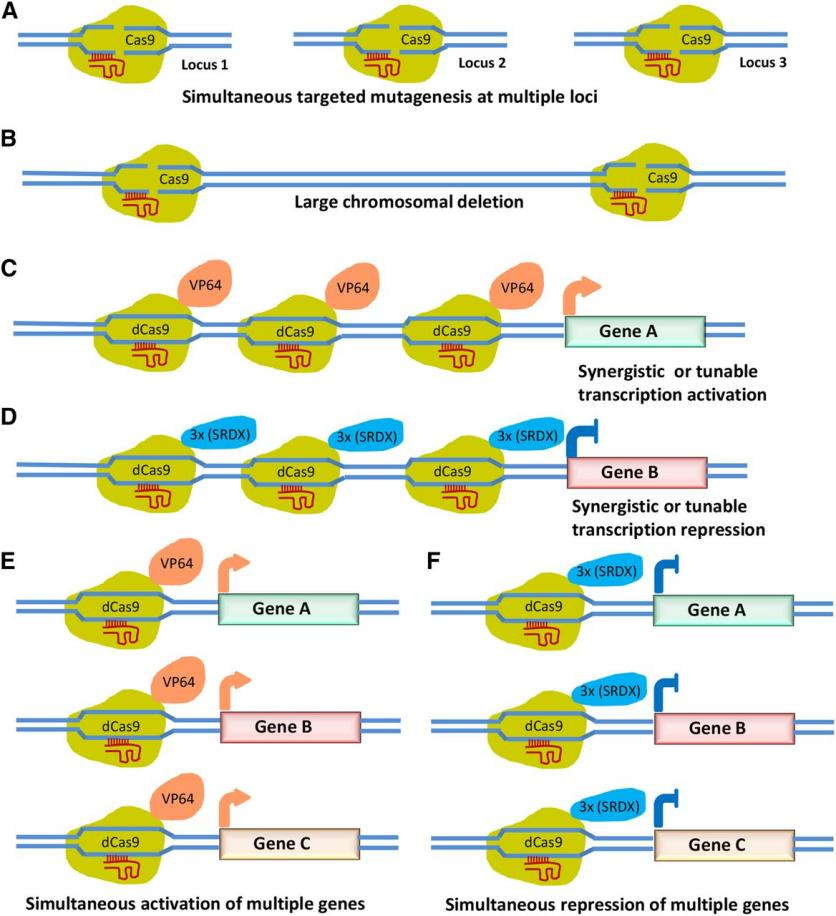
Figure 3: Applications of the multiplex CRISPR/Cas9 toolbox. Different situations are illustrated in the application of the various elements of the toolbox. A, Simultaneous targeted mutagenesis at multiple loci in the same gene or in different genes. B, Chromosomal deletion. C, Synergistic or tunable transcription activation. D, Synergistic or tunable repression. E, Multiple genes are activated simultaneously. F, Multiple genes are repressed at once 48.
In C. roseus, the TF family known as ORCA (octadecanoid-responsive Catharanthus AP2-domain) TFs, such as ORCA3, ORCA4, and ORCA5, bind the promoters of several MIA pathway genes, such as DXS, G10H, STR (strictosidine synthase), and D4H (desacetoxyvindoline 4-hydroxylase). These transcription factors incorporated jasmonate signaling pathways into secondary metabolism and were repressed by JAZ repressors, which inhibited ORCA-mediated transcription. This repression was alleviated by jasmonate signaling via JAZ degradation, which allowed the activation of the pathway 45. Though CRISPR-based transcriptional activation system like dCas9-VPR is a potential method of promoting transcription factor expression, its use in C. roseus on ORCA genes has not been experimentally tested yet.
WRKY transcription factors are positive and negative regulators of plant secondary metabolism. AaWRKY1 and AaWRKY9 stimulate important genes in artemisinin biosynthesis, such as amorpha-411-diene synthase (ADS) and CYP71AV1, in glandular trichomes. WRKY-mediated transcriptional activation was repressed by jasmonate signaling repressors like the JAZ proteins, and JAZ degradation by jasmonate perception alleviates this repression. CRISPR-based editing of JAZ repressors was a possible approach to be used to increase transcription factor activity, but no experimental reports of synergistic metabolic enhancement using AaWRKY1 overexpression plus AaJAZ8 knockout have been reported 46.
MYB transcription factors are major regulators of flavonoid biosynthesis, that regulate the ratio of anthocyanin to proanthocyanidin synthesis in plants. VvMYBPA1 and VvMYBPA2 are positive regulators of proanthocyanidin biosynthesis in grapevine (Vitis vinifera), and they activate tannin biosynthetic genes. Although genome editing using CRISPR/Cas could provide a viable approach to altering the flavonoid pathway regulators, direct experimental data showing CRISPR activation of VvMYBPA1 or VvMYBPA2 resulting in metabolic redirection to accumulate anthocyanin have not been reported yet 47.
Multiplex Editing and Metabolic Flux Optimization: Several secondary metabolite pathways undergo metabolic competition through multiple branching points; hence, the need to edit several genes at the same time when aiming for high yield of the target metabolite can be achieved with the multiplexing nature of CRISPR 48. Cas12a (Cpf1) is particularly effective in conducting multiplexed gene editing in plants as it can self-process its own crRNA arrays from a single transcript and deliver four, eight, or even more different guides from a single construct.
The concept was utilized successfully in manipulating secondary metabolism in tomato (Solanum lycopersicum), where Cas12a-based multiplexed editing has been used to target multiple genes involved in the synthesis of the steroidal glycoalkaloid (SGA) metabolism pathway. These lines displayed low tomatine accumulation without any adverse effects on the growth of the plant; a metabolic repurposing that would otherwise require at least five back-crossings or five separate genetic transformations 49.
Metabolic flux analysis (MFA) and computational analysis are tools that complement multiplexed CRISPR editing, enabling quantitative prediction of how to edit to increase flux through the pathway leading to the desired product under certain growth conditions. Integrated genome-scale and transcriptome studies in Catharanthus roseus have shown that monoterpenoid indole alkaloid biosynthesis is complex, tissue-specifically regulated, and identified important control points in pathway flux, including geraniol synthase (GES), 8-hydroxygeraniol oxidoreductase (8-HGO), and strictosidine glucosidase (These results indicate that the simultaneous expression of various genes can be more efficient as compared to individual genes in increasing the production of various metabolites 50. Epigenome editing represents yet another powerful tool, involving the use of CRISPR systems fused with methylases and demethylases. A total of n plants, with biosynthetic gene clusters involved in secondary metabolism, can be silenced by transcriptional silencing of DNA methylation. CRISPR-based systems of targeted demethylation are a promising approach to reactivate such silent pathways, similar to what has been done with fungi to activate secondary metabolite gene clusters 51.
Therapeutic Applications and Clinical Relevance of CRISPR-Enhanced Phytochemicals: While the pharmaceutical and clinical importance of CRISPR-enhanced phytochemical biosynthesis extends beyond academic interest in metabolic engineering, it addresses supply-demand imbalances for some of the world's most clinically important plant-derived drugs, many were presented in Table II. Artemisinin production shortfalls have caused price instability that has affected access to artemisinin-combination therapies in low-resource malaria-endemic regions on at least three separate occasions since 2004 52. While the semi-synthetic manufacturing of artemisinin via yeast expression has helped to stabilize supplies of this drug, plant-produced artemisinin retains economic viability and, with CRISPR-enhanced cultivars of Artemisia annua, has potential to secure and expand its supply chain if regulatory roadblocks can be addressed 53.
Paclitaxel is sourced from the bark of Taxus brevifolia and T. chinensis cell suspensions, with a global demand of around 300 kg per annum for oncological applications. CRISPR-enhanced Taxus cell suspension cultures appear to be a promising production system for this compound. Paclitaxel cell suspension cultures generated from T. chinensis lines have been engineered to upregulate the expression of the two late pathway acyltransferases (BAPT and DBAT), resulting in increased accumulation of paclitaxel intermediates, including baccatin III 54.
CBD clinical progression showed that CRISPR-edited crops could help achieve pharmaceutical-grade manufacturing that meets regulatory requirements. In 2018, the FDA licensed CBD as Epidiolex for the treatment of patients with Dravet and Lennox-Gastaut syndromes, creating the need for good manufacturing practice (GMP) grade crops that are high in CBD content but low in THC. It is challenging to ensure the quality of such crops via traditional breeding because the gene expression ratio of CBDAS/THCAS is genetically unstable in open-pollinated populations of cannabis plants 55. Berberine from Coptis japonica and Berberis species has been shown in clinical trials to be effective in type 2 diabetes, dyslipidemia, and non-alcoholic fatty liver diseaseTo gain a better insight into pathway structure the he berberine bridge enzyme (BBE) that catalyzes the most important oxidative cyclization of (S)-reticuline to (S)-scoulerine in the benzylisoquinoline alkaloid pathway has been functionally characterized using genetic and biochemical methods 56.
| Compound | Class | Clinical Indication(s) | Annual Demand / Supply Challenge | CRISPR Engineering Approach | Status / Yield Gain | Key Barrier |
|---|---|---|---|---|---|---|
| Artemisinin 53 | Sesquiterpene lactone | Malaria (ACTs); cancer (repurposing) | ~500 MT/year; price volatile | SQS1 KO + ADS CRISPRa in A. annua | ↑ 2.1× lab | Regulatory (GMO in endemic regions) |
| Paclitaxel (Taxol) 54 | Diterpenoid | Ovarian, breast, lung cancer (FDA-approved) | ~300 kg/year; bark-destructive extraction | BAPT + DBAT CRISPRa in T. chinensis cell culture | Preclinical; baccatin III | Scale-up from cell culture to bioreactor |
| Vinblastine / Vincristine 31 | Monoterpene indole alkaloid | Leukemia, lymphoma (WHO Essential Medicines) | Extremely low yield (~2–5 mg/kg) | BIS1 repessor; ORCA3 CRISPRa in C. roseus | Hairy root lines; ↑ 2.5× vindoline | Stable regeneration of C. roseus is difficult |
| Cannabidiol (CBD) 57 | Terpenophenolic | Epilepsy (investigational); pain, anxiety | Rapid growth; regulatory compliance critical | THCAS KO in hemp; OLS/OAC amplification | Research-stage only | Regulatory GMO status varies by country |
| Berberine 56 | Isoquinoline alkaloid | T2DM, dyslipidemia, NAFLD (clinical trials) | Rising demand; limited high-quality source | 6OMT/CjSMT; Potential CRISPRa targets | Research stage; in hairy roots | Coptis japonica regeneration protocols limited |
| ACT = artemisinin-combination therapy; KO = knockout; SQS1 = squalene synthase 1; ADS = amorpha-4,11-diene synthase; BAPT = 3-amino-3-phenylpropanoyl-10-deacetyltaxol-O-acetyltransferase; DBAT = 10-deacetyl baccatin III-10-O-acetyltransferase; BIS1 = bHLH-iridoid synthesis TF; ORCA3 = octadecanoid-responsive Catharanthus AP2 3; THCAS = THCA synthase; OLS = olivetol synthase; OAC = olivetolic acid cyclase; 6OMT = (S)-norcoclaurine 6-O-methyltransferase | ||||||
Challenges, Regulatory Landscape, and Future Perspectives: Despite significant breakthroughs in CRISPR-Cas9 applications in plant secondary metabolism, the translation of modified medicinal plants from laboratory systems to field cultivation and pharmaceutical usage is restricted by biological, technical, and regulatory barriers 58. Many therapeutic species, including Catharanthus roseus, Papaver somniferum, and Taxus brevifolia, are resistant to tissue culture, making regeneration of complete plants from altered cells difficult. While hairy root cultures are useful for root-specific metabolites, they do not reproduce the metabolic complexity of the entire plant.
Although progress in somatic embryogenesis and organogenesis is being made, it remains species-specific and inefficient. Off-target effects are a technical problem, particularly in polyploid or poorly annotated genomes; medicinal plants like Cannabis sativa and Panax ginseng (tetraploid) pose specific challenges, requiring costly whole-genome validation. However, advances in long-read sequencing technologies are helping to alleviate these restrictions 59. Regulatory frameworks have a significant impact on translational potential. While countries like the United States take product-based approaches that encourage transgene-free modifications, regions like the European Union apply severe regulations, resulting in disparities in commercialization pathways. Regardless of editing approach, plant uniformity and quality control requirements remain essential to pharmaceutical applications 60.
The emerging integration of CRISPR with synthetic biology and computational technologies broadens the scope of plant metabolic engineering. Synthetic gene circuits and machine learning-guided enzyme design are examples of innovations that enable accurate, condition-dependent metabolite production, paving the door for next-generation phytomedicine research.
The opportunities to manipulate biosynthetic pathways of pharmaceutically important phytochemicals in medicinal plants have been increased by the advent of CRISPR-Cas9 and other genome-editing technologies. Gene disruption, activation of genes using the CRISPR approach, engineering of transcription factors, and multiplex editing have shown promise in modifying metabolic pathways and phytochemical production in selected experimental systems. But there are significant issues to address such as inefficient transformation and regeneration, pathway complexity, metabolic trade-offs, scalability, and regulatory differences. Improved phytochemical production has been reported in some, but not all cases and many are still in the experimental or proof-of-concept stage. Further development of genome editing technology, genomic resources, and tissue culture, metabolic modelling and regulatory frameworks could enable the translation to real-world applications. In summary, CRISPR engineering is a viable strategy for enhancing the production of therapeutic phytochemicals, but needs to be validated and scaled up further.

Journal of Biomolecules, Pathogenesis and Therapeutics, J Biomol Pathog Ther. 2026;2(2), p69-71 (jbptjournal.org) © 2026 Authors. This work is published by Multidisciplinary Scholarly Advancement and Research MSAR Institute. The full terms of Journal Publishing policy is available at https://jbptjournal.org/index.php/jbpt/-publishing-license and incorporate the Creative Commons Attribution – Non Commercial (CC BY, NC 4.0) License https://creativecommons.org/licenses/by-nc/4.0/. By accessing the work you hereby accept the Terms. Non-commercial uses of the work are permitted without any further permission, provided the work is properly attributed. Publisher’s Note: MSAR Institute remains neutral with regard to jurisdictional claims in published maps and institutional affiliations, and assumes no liability for the scientific accuracy or clinical efficacy of the content herein, as they rest entirely with the authors.