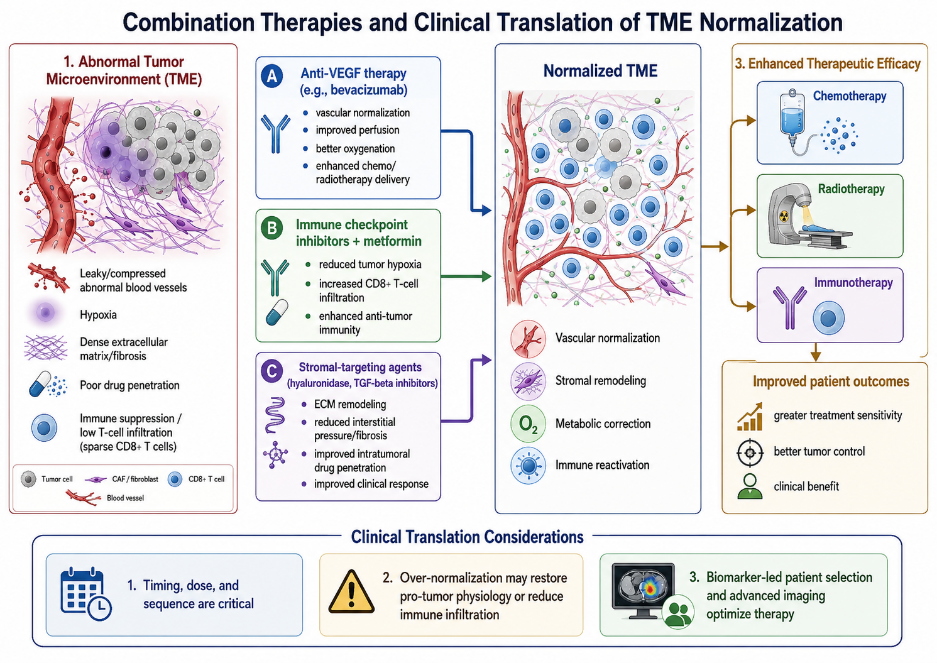
Figure 1. Integrated combination therapies for tumor microenvironment normalization and clinical translation 15.
Asma Ali1*
1Department of Pathology, Chughtai Laboratory, Services Hospital, Lahore, Pakistan
*Correspondence: Asma Ali ([email protected])
Received: 10 April, 2026; Revised: 30 May, 2026; Accepted: 04 June, 2026; Published: 10 June, 2026
The Tumor Microenvironment (TME) is a complicated ecosystem that consists of cancer cells, stromal components, immune infiltrates, and vascular networks, which determine tumor progression, metastasis, and resistance to treatment. Historically, the treatment of cancer has been aimed directly at malignant cells without considering the contribution of the deviant microenvironment that provides sustenance to the tumors. Recent observations have highlighted that by reprogramming or re-establishing vascular integrity, immune cell homeostasis, and metabolic and stromal signaling, the TME can be reconfigured to become tumor restraining. Different therapeutic approaches that are aimed at aberrant angiogenesis, hypoxia, immune suppression, and extracellular matrix (ECM) remodeling have shown synergistic effects in association with chemotherapy or immunotherapy. There is, however, an intrinsic heterogeneity and dynamic adaptation of the TME, which is a major issue in clinical translation. The present review brings into the limelight the recent concept of TME normalization as a paradigm shift in therapy, which offers a pathway to sustainable and complete cancer management.
Keywords: Tumor Microenvironment, Angiogenesis, Immunotherapy, Tumor Hypoxia, Extracellular Matrix.
The dynamic interactions between malignant cells with Tumor Microenvironment (TME), which consists of immune cells, fibroblasts, endothelial cells, and elements of the extracellular matrix (ECM), determine cancer progression 1. The TME is a sheltering space that facilitates the growth of tumors, the avoidance of immune response mechanisms, and treatment resistance. Most of the conventional anticancer therapies have been directed at destroying tumor cells without much regard to the abnormal stromal and vascular compartments that support them 2. More recent developments indicate that the TME can be targeted and normalized to achieve physiological homeostasis, improve drug delivery, and immune infiltration. This notion is a radical change in the destructive interventions to functional reprogramming, which tries to transform a hostile microenvironment to support therapeutic efficacy and immune activation 3.
Pathophysiological Landscape of Tumor Microenvironment: This TME is also marked by hypoxia, acidosis, abnormal vasculature, immunosuppression, as well as dysbalanced stromal signaling. The angiogenic and metabolic adaptation to hypoxia is mediated by hypoxia-induced factors (HIFs), which facilitate the survival of tumors in the oxygen-deprived environment 4. The ECM is remodeled by cancer-associated fibroblasts (CAFs), which secrete cytokines, including TGF-β and IL-6, that facilitate invasion and immune evasion. The endothelial cells in tumors develop abnormal, permeable vessels, which develop skewed perfusion and poorly accessible drugs 5. Moreover, Myeloid-Derived Suppressor Cells (MDSCs) and Regulatory T cells (Tregs) intrusion ensures the presence of an immunosuppressive environment, which restricts the activity of cytotoxic T-cells. All of these attributes lead to a self-perpetuating loop of tumor survival and resistance to therapy, making the TME into a barrier and a therapeutic target 6.
Therapeutic justification of TME normalization: Normalization is also done to undo the pathologic signature of the TME instead of simply destroying its constituents. Normalization of blood vessels with transient anti-angiogenic therapy is shown to enhance perfusion and oxygenation, drug delivery, and access of immune cells. Equally, CAFs can be reprogrammed to a quiescent state to lessen fibrosis and interstitial pressure, which promotes treatment success 7. The metabolic normalization aims at the reduction of lactate levels and the pathways caused by hypoxia, which helps to restore redox balance and avoid immune cell exhaustion. Anti-tumor immunity is reactivated by immunomodulatory normalization through the checkpoint inhibitor, cytokine therapy, or MDSC depletion. The combination of these approaches synergistically changes the TME between a tumor-supportive and tumor-suppressive environment to enhance the efficacy of conventional therapies 8.
Combination Therapies and Clinical Translation: There have been promising results of TME normalization combined with the existing cancer therapies. Anti-VEGF therapy, like bevacizumab, momentarily regulates the vasculature and exposes tumors to chemotherapy and radiotherapy 9. In the same manner, the combination of immune checkpoint inhibitors with metabolic modulators such as metformin boosts the tumor infiltration by T-cells and decreases tumor hypoxia 10. There has been a trial of stromal-targeting agents, including hyaluronidase or TGF-β inhibitors, which reportedly showed improved intratumor penetration of agents and significantly improved clinical responses. However, the timing, dose, and sequence of normalization therapies are very crucial, as over-normalization can reestablish pro-tumor physiology or inhibit immune infiltration 11. Therefore, improved predictive patient outcomes and better utilization of these combinations require a biomarker-led approach and the employment of advanced imaging 12.Challenges and Future Projections: Although it is promising, TME normalization has several impediments in clinical use. The heterogeneity of the TME among tumor types, stages, and anatomical sites makes the standardization of the therapies complicated. Besides, adaptive resistance mechanisms, e.g., vessel co-option or immune exclusion, may restrict long-term efficacy. The need to determine strong biomarkers that indicate normalization of TME in real time has not yet been fulfilled 13. The next steps are the incorporation of multi-omics profiling and spatial transcriptomics with single-cell analysis and their implementation to map out the dynamics of the TME. Normalization strategies combined with immunotherapy, nanomedicine, or metabolic reprogramming as rational combination regimens would create opportunities to achieve cancer control and better patient survival 14.
Figure 1. Integrated combination therapies for tumor microenvironment normalization and clinical translation 15.
The reconstruction of the tumor microenvironment is a groundbreaking strategy of contemporary oncology. The therapies will re-establish immune surveillance and enhance drug availability and overcome resistance by restoring structural and functional normalcy in the TME. Although issues associated with heterogeneity and adaptability persist, the theoretical transformation of the concept of elimination to normalization has the prospective to reshape the results of cancer treatment. With the development of precision oncology, the future of cancer treatment might consist not only of attacking the tumor but also of re-educating its favorable ecosystem to a balanced state and immune competence.
Acknowledgement
None
Conflict of Interest
None
Grant Support & Funding Source
None
Use of Artificial Intelligence
Figure 1 has been created by using OpenAI ChatGPT (GPT-4o) solely for the purpose of better illustration and scientific understandings. The corresponding author declared that no other artificial intelligence or AI-assisted tools were used anywhere in this manuscript.
Authors’ Contribution
AA is sole contributor of this manuscript as per ICMJE

Journal of Biomolecules, Pathogenesis and Therapeutics, J Biomol Pathog Ther. 2026;2(2), p69-71 (jbptjournal.org) © 2026 Authors. This work is published by Multidisciplinary Scholarly Advancement and Research MSAR Institute. The full terms of Journal Publishing policy is available at https://jbptjournal.org/index.php/jbpt/-publishing-license and incorporate the Creative Commons Attribution – Non Commercial (CC BY, NC 4.0) License https://creativecommons.org/licenses/by-nc/4.0/. By accessing the work you hereby accept the Terms. Non-commercial uses of the work are permitted without any further permission, provided the work is properly attributed. Publisher’s Note: MSAR Institute remains neutral with regard to jurisdictional claims in published maps and institutional affiliations, and assumes no liability for the scientific accuracy or clinical efficacy of the content herein, as they rest entirely with the authors.